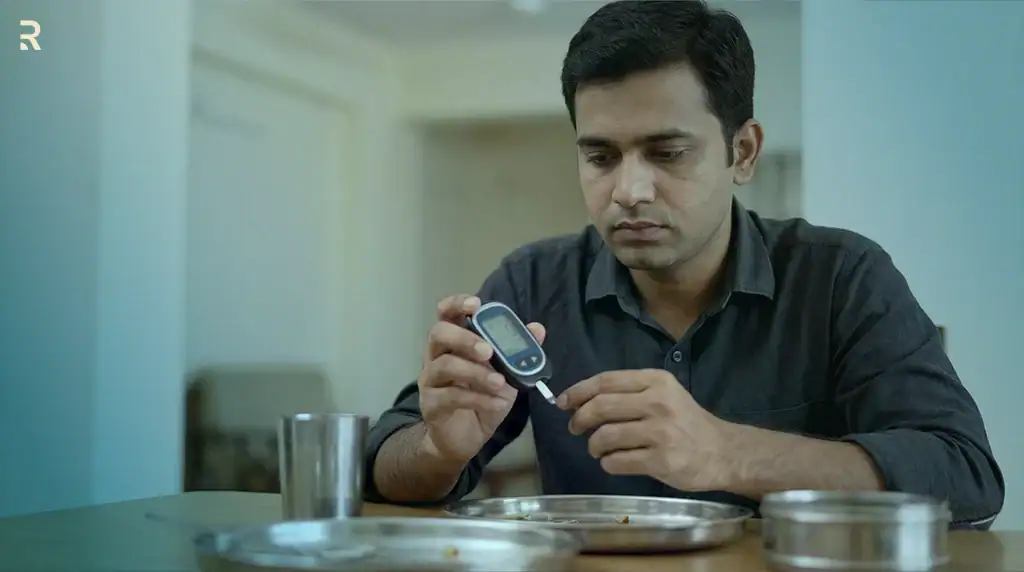
Yes, diabetes and erectile dysfunction are closely linked. Years of high blood sugar damage the blood vessels and nerves needed for an erection. More than half of men with diabetes have some erectile dysfunction (ED), and they are about three and a half times as likely to get it as other men. It is common, and it is treatable.
If you have diabetes (many Indian families simply call it "sugar") and your erections have changed, you are not imagining it, and you are far from alone.
It explains why diabetes affects erections, how to tell it apart from stress, whether it can be reversed, which treatments work for diabetic men, what is different in India, and when to see a doctor. Diabetes is one of several root causes of sexual problems in men, and it is one that a doctor can do a lot about.
Does diabetes cause erectile dysfunction?
Yes. Diabetes is one of the most common medical causes of erectile dysfunction, and the link is well proven. The good news is that most men who get the right help see a real improvement.
A large 2017 review that pooled 145 studies covering more than 88,000 men found ED in 52.5% of men with diabetes. Compared with healthy men, men with diabetes had about 3.6 times the odds of having ED. A US national survey (Selvin and colleagues, 2007) found a similar picture: 51.3% of men with diabetes reported ED, and diabetes was linked to ED even after age and other factors were taken into account.
Two things are worth knowing from the start:
- It often starts earlier. According to the US National Institute of Diabetes and Digestive and Kidney Diseases (NIDDK), men with diabetes may develop ED 10 to 15 years earlier than men without it.
- It is a signal, not just a symptom. The same damage that affects erections also affects the heart, kidneys and eyes. Paying attention to your erections is one more way of looking after your whole body.
If you want the bigger picture on erection problems in general, including causes that have nothing to do with sugar, read our guide to erectile dysfunction causes and treatment. The rest of this page focuses on what is specific to diabetes.
Why does diabetes cause erection problems?
Diabetes affects erections through several root causes at the same time: damaged blood vessels, damaged nerves, low testosterone, stress or low mood, and sometimes the other conditions and medicines that come with diabetes. Most men have more than one of these at once.
An erection is a team effort. Your brain sends a signal down the nerves, the blood vessels in the penis relax and fill with blood, hormones keep your desire switched on, and your mind has to be relaxed enough to let it all happen. Diabetes can interfere with every one of these steps.
This is why the Raaz approach starts with finding your root cause. Two diabetic men with the same weak erections can need quite different treatment: one mainly needs better blood flow, the other has low testosterone and poor sleep. Handing both of them the same tablet and hoping for the best is one reason many men give up on treatment too early.
1. Blood vessel damage (less blood reaching the penis)
This is the most common cause. Years of high blood sugar damage the thin inner lining of blood vessels, called the endothelium. That lining makes nitric oxide, the chemical that tells vessels to relax and open up. With less nitric oxide, the vessels in the penis cannot widen properly.
Over time, the arteries also become narrower and stiffer, a process called atherosclerosis. The arteries to the penis are much smaller than the ones to the heart, so they often show the damage first. Less blood flowing in means erections that are softer, slower to come and harder to keep.
2. Nerve damage (diabetic neuropathy)
High sugar also damages nerves. Many diabetic men first notice this as tingling, burning or numbness in the feet. The same thing can happen to the nerves that carry signals to the penis and control the blood vessels there.
When those nerves are damaged, arousal does not "reach" the penis properly. You may feel desire in your mind, but the body does not respond the way it used to. Nerve damage can also reduce sensation and change how you ejaculate, which we cover further down.
3. Low testosterone
Men with diabetes, especially those who are older or overweight, are more likely to have low testosterone. NIDDK notes that low levels may be behind some men's ED, and can also explain tiredness, low mood and a low sex drive.
Low testosterone mostly lowers desire, but it can also weaken erections. The only way to know is a blood test taken in the morning, when levels are highest. Our guide to low testosterone symptoms in men lists the other signs to look out for.
4. Stress, anxiety and low mood

Living with diabetes is tiring. There are tablets or insulin to remember, sugar readings to check, food to watch, and constant worry about complications. Depression is also more common in people with diabetes. All of this lowers desire and makes erections harder.
Then a second problem kicks in. After one or two bad experiences, many men start to fear the next attempt. That fear, often called performance anxiety, releases stress hormones that work directly against an erection. So even when the physical damage is mild, worry can make the problem much worse.
The American Diabetes Association says experts believe psychological factors such as stress, anxiety, depression and fear of sexual failure cause 10 to 20% of ED cases. In a diabetic man they usually sit on top of a physical cause, which is why counselling is a genuine treatment, not an afterthought.
5. Linked conditions and medicines (BP, cholesterol, smoking, some tablets)
Diabetes rarely travels alone. Many diabetic men also have high blood pressure, high cholesterol or extra weight, and each of these damages blood vessels in its own way. If you have BP as well, read about high blood pressure and erection problems. If your lipid report is off, see how cholesterol affects erections.
Habits add to the damage. Smoking narrows the same small arteries that diabetes attacks, so the two together are especially harmful. Our post on whether smoking causes erectile dysfunction explains what quitting can undo. Heavy drinking lowers testosterone and also makes sugar harder to control.
Some medicines can play a part too:
- Some BP tablets, such as certain water pills (diuretics) and some beta blockers, can affect erections in some men.
- Some antidepressants can lower desire or delay climax.
- Some acidity and ulcer tablets are also listed by the American Diabetes Association as possible causes.
- Metformin, the most common diabetes tablet, is often blamed online. The research is mixed, and diabetes itself is a far bigger cause of ED than the medicine used to treat it.
Never stop or change a diabetes, BP or heart medicine on your own. Stopping suddenly can be dangerous. Tell your doctor about the erection problem instead, because there is often an alternative medicine that suits you better.
Not sure whether it is your sugar, low testosterone, stress or something else? Take the free, private Men's Test. It takes about 2 minutes and points to your likely root cause, so the conversation with a doctor starts in the right place.
What are the signs that diabetes is affecting your erections?
Diabetes-related ED usually creeps in slowly. Erections get softer or harder to keep over months, morning erections become rare, and it happens every time, not only in certain situations. Low sex drive and changes in ejaculation can come with it.
Common early signs include:
- Erections that take longer and need more touch to start
- Erections that are firm enough at first but fade before or during sex
- Fewer morning or night-time erections than before
- Erections that are never fully hard, even when you are relaxed and aroused
Diabetes-related ED vs stress-related ED
Many men want to know whether the cause is "in the body" or "in the mind". In real life it is often both, but this comparison gives a rough idea:
| Clue | More likely diabetes (physical) | More likely stress (psychological) |
|---|---|---|
| How it started | Gradually, over months or years | Suddenly, often after a stressful event |
| When it happens | Almost every time, in every situation | Only in some situations, or with a partner but not alone |
| Morning erections | Rare or weak | Usually still present |
| Other body signs | Tingling or numbness in feet, high HbA1c | Poor sleep, worry, tension in the relationship |
| Desire | May be low if testosterone is low | Often normal, but mixed with fear |
Morning erections are a useful clue, not a diagnosis. Some men with physical ED still get them now and then, and poor sleep alone can reduce them. A doctor puts these clues together with your reports.
Other sexual problems diabetes can cause
- Low sex drive. Low testosterone, tiredness and low mood can all reduce desire.
- Less semen, or a dry climax. When nerve damage affects the muscle at the neck of the bladder, some or all of the semen can go backwards into the bladder instead of out. This is called retrograde ejaculation. NIDDK describes it as rare in diabetes. It is not harmful, but it can affect fertility, so mention it if you are trying for a child.
- Slower climax or reduced sensation, from nerve damage.
- A bend in the penis. NIDDK notes that men with diabetes are more likely to develop Peyronie's disease, where scar tissue makes the erect penis curve.
- Premature ejaculation. Some men start rushing sex because they fear losing the erection, which can lead to climaxing too early.
- Soreness or infection of the penis head (balanitis), which is more likely when sugar runs high.
Tests your doctor may suggest
Because the causes overlap, a good assessment checks several things at once:
- HbA1c and fasting sugar, to see how well your diabetes has been controlled over the last three months.
- Lipid profile, for cholesterol and triglycerides.
- Blood pressure, checked properly, not just once in a hurry.
- Morning testosterone, ideally taken before 10 or 11 am, and repeated if it comes back low.
- Thyroid (TSH), since thyroid problems can also affect desire and erections.
- Kidney function and a foot or nerve check, to see if other diabetes damage is present.
You do not need all of these on day one. A doctor chooses based on your history, your age and your last reports.
Is erectile dysfunction from diabetes reversible?
Often it improves a lot, especially when it is caught early. How far it reverses depends on how long your sugar has been high and how much nerve and blood vessel damage has already happened, so starting treatment sooner gives better results.
Here is an honest picture of what the research shows:
- Weight loss helps diabetic men. In a small study of 31 obese men with type 2 diabetes (Khoo and colleagues, 2011), losing about 5 to 10% of body weight through diet improved erectile function, sexual desire and blood vessel health within 8 weeks, and the gains held at one year.
- Lifestyle change can restore normal function in some men. In an Italian trial (Esposito and colleagues, JAMA 2004), 17 of 55 obese men who lost weight and became more active regained normal erectile function over two years, against 3 of 55 in the comparison group. Those men did not have diabetes, but the blood vessel mechanism is the same.
- The effect is smaller in older men with long-standing diabetes. In the large US Look AHEAD trial, weight loss mainly helped older diabetic men keep their erections from getting worse, rather than fully restoring them.
What this means in practice:
- If your diabetes is recent or your ED is mild, better sugar control, weight loss and exercise can make a big difference, sometimes enough on their own.
- If you have had high sugar for many years, some nerve and vessel damage may not fully heal. That does not mean you cannot have a satisfying sex life. It means you will probably need medical treatment alongside the lifestyle changes.
- Low testosterone and stress-related ED are often very treatable, whatever your HbA1c.
Anyone who promises a "permanent cure" in a fixed number of days is selling something. The realistic goal is reliable, satisfying erections, and most diabetic men can reach it with the right plan. The first step is finding out which causes apply to you.
How is diabetes-related erectile dysfunction treated?
Treatment usually combines better blood sugar control, prescription tablets that improve blood flow, testosterone treatment if levels are low, and counselling. If tablets do not work, injections, vacuum devices or an implant are options.
Blood sugar control comes first
Better control protects the nerves and vessels you still have and stops the damage getting worse. It also improves energy, mood and, in many men, testosterone. For most adults with diabetes, doctors aim for an HbA1c of around 7% or below, but your personal target depends on your age and health, so agree it with your diabetologist.
Sugar control alone often does not bring erections back once ED has set in. Think of it as the foundation that makes every other treatment work better.
Tablets (only on a doctor's prescription)

The first medical treatment for most men is a group of tablets called PDE5 inhibitors, such as sildenafil and tadalafil. They do not create desire on their own. They help the blood vessels in the penis relax when you are aroused, so more blood can flow in.
They work for many diabetic men. In a well-known trial of 268 diabetic men (Rendell and colleagues, JAMA 1999), 56% of those on sildenafil reported better erections after 12 weeks, compared with 10% on a dummy pill. That also shows the honest limit: they tend to work less well in diabetic men than in men without diabetes, especially when nerve damage is advanced. If the first prescription does not help enough, a doctor can review how you are taking it, check your testosterone, or change the plan. Do not adjust anything yourself.
Important safety points:
- Never take them with nitrate heart medicines (tablets or sprays for chest pain, such as those put under the tongue). The combination can cause a dangerous drop in blood pressure.
- They may not be suitable if you have serious heart disease, very low BP, or have had a recent heart attack or stroke.
- Take them only on a doctor's prescription, never from a chemist counter or a website that does not ask for one.
For more detail on how these tablets work, common side effects and who should avoid them, read sildenafil tablets: uses and safety.
Testosterone therapy, only if levels are low
If morning blood tests confirm low testosterone and you have symptoms, a doctor may suggest testosterone treatment as a gel, injection or patch. NIDDK notes that several studies show it can ease sexual problems when combined with good diabetes management. It can also help PDE5 tablets work better in some men.
It is not for everyone. It is not a "strength booster" for men with normal levels, it can reduce sperm production, so it is usually not suitable for men trying for a child, and NIDDK cautions that it carries real risks and is not safe for all men. It needs regular blood tests and follow-up.
Counselling, alone or as a couple
Because worry and low mood make diabetic ED worse, talking to a trained counsellor or sex therapist can help a lot, even when the main cause is physical. Many men find that once the fear of failure eases, their tablets start working better too.
Couples counselling helps when the problem has created distance or blame in the relationship. A partner who understands that this is a medical problem, not a lack of attraction, makes recovery much easier.
If tablets don't work: injections, vacuum devices and implants
If tablets do not help enough, there are still good options. Urologists offer these regularly:
- Penile injections. A tiny needle delivers medicine directly into the side of the penis, producing an erection within minutes. They often work when tablets fail. A doctor teaches you how to do it safely.
- Vacuum erection devices. A plastic tube and pump draw blood into the penis, and a band at the base holds it there. There are no drugs involved, so they suit men who cannot take tablets.
- Penile implants. A surgeon places inflatable or bendable rods inside the penis. It is usually the last step, but satisfaction rates among men who choose it are generally high.
Lifestyle changes: food, weight, activity, smoking and alcohol

- Lose some weight if you carry extra. Even 5 to 10% of your body weight, especially from the belly, can improve sugar, testosterone and blood flow.
- Move every day. Aim for about 150 minutes a week of brisk walking, cycling or similar, plus some strength work. Exercise helps your vessels make nitric oxide.
- Quit smoking, gutkha and khaini. Tobacco in any form narrows the small arteries diabetes has already damaged.
- Cut down on alcohol. Heavy drinking lowers testosterone, raises sugar and can cause dangerous lows if you take insulin or some diabetes tablets. See how alcohol affects erections.
- Sleep 7 to 8 hours. Poor sleep and untreated snoring (sleep apnoea) lower testosterone and worsen sugar control.
Which treatment suits which man?
| Treatment | How it helps | Who it suits | Prescription needed? |
|---|---|---|---|
| Better sugar control | Stops further nerve and vessel damage | Every diabetic man | Yes, for diabetes medicines |
| Lifestyle changes | Improves blood flow, sugar and testosterone | Every man, especially with extra weight | No |
| PDE5 tablets (sildenafil, tadalafil) | Helps penile blood vessels relax during arousal | Most men, unless on nitrates or with serious heart disease | Yes |
| Testosterone therapy | Restores desire and energy, can help tablets work | Men with confirmed low testosterone | Yes |
| Counselling | Reduces anxiety and relationship strain | Men with stress, low mood or performance fear | No |
| Penile injections | Medicine acts directly on the penis | Men for whom tablets do not work | Yes |
| Vacuum device | Draws blood in mechanically | Men who cannot take tablets | Doctor's advice recommended |
| Penile implant | Surgical, gives an erection on demand | Men for whom other options have failed | Surgery by a urologist |
How common is diabetes-related ED in India?
Very common. The ICMR-INDIAB study estimated that India has about 10.1 crore people with diabetes and another 13.6 crore with prediabetes. A 2025 review of Indian studies found erectile dysfunction in about 60% of men with type 2 diabetes. Yet most men never mention it to their diabetologist.
That adds up to crores of Indian men living with a treatable problem in silence. The authors of that review wrote that the stigma, stress and fear around ED need to be addressed, along with screening and early treatment.
Why Indian men stay silent about it
In many busy Indian clinics, the diabetes visit is short and focused on sugar numbers. Doctors often do not ask about sex, and men rarely bring it up. Several things keep it hidden:
- Embarrassment. Many men feel it reflects on them as a man, when it is simply a complication, like tingling feet or blurred vision.
- Family visits. A wife, son or parent often comes along to the diabetes clinic, which makes a private question almost impossible.
- Marriage and family pressure. Younger men with diabetes worry about marriage or starting a family, and older men worry about what their wife will think. Both keep quiet and hope it passes.
- Quick fixes. Instead of seeing a doctor, many men try a roadside "sex clinic", a friend's tablet or a herbal packet bought online.
If you find it hard to raise in the clinic, you can book a separate, private consultation, or start with an online doctor from home. You can also simply say, "Doctor, I have been having some problems with erections." Doctors hear this every day.
Indian diet swaps that help blood sugar
No single food fixes ED, but eating in a way that steadies your sugar protects the vessels and nerves that erections depend on. A few practical swaps for an Indian kitchen:
- Watch the rice and maida. Keep white rice to a smaller portion, and cut down on maida items such as naan, bread, biscuits and samosas.
- Change your roti. Try rotis made with bajra, jowar or ragi, or mixed with besan, instead of only refined atta.
- Fill half the plate with sabzi. Leafy greens, gourds and salad slow down the rise in sugar after a meal.
- Get protein at every meal. Dal, chana, rajma, paneer, curd, eggs, fish or chicken keep you full and help sugar stay stable.
- Rethink chai and mithai. Two or three cups of sweet chai a day and "just one" sweet after dinner add up fast. Cut the sugar gradually, and save mithai for festivals.
- Go easy on fried snacks and packaged juices. Namkeen, pakoras and "fruit drinks" are common hidden sources of fat and sugar.
What about karela (bitter gourd), methi (fenugreek) seeds and jamun? Small studies suggest they may lower blood sugar a little. They are fine as part of a healthy diet, but they do not treat ED, and they must never replace your prescribed diabetes medicines. Taking them in large amounts alongside medicines can even push your sugar too low. For more ideas, see our list of foods that help erectile dysfunction.
Ayurvedic and "herbal" sex tablets: what the evidence says
Many diabetic men try an ayurvedic or "100% herbal" sex tablet before seeing a doctor. It is understandable: they are easy to buy, and no one has to know. But here is what the evidence actually shows:
- No good proof for ED. There are no good-quality trials showing that any ayurvedic product treats erectile dysfunction in diabetic men.
- Heavy metals. A US study found that about one in five ayurvedic medicines bought online contained lead, mercury or arsenic, in both Indian-made and US-made products. People with diabetes often already have some kidney strain, which makes this more of a concern.
- Hidden drugs. Some "herbal" sex products have been found to contain undeclared prescription ingredients, which can be dangerous for men on heart medicines.
- Drug interactions. Herbs can interact with diabetes, BP and heart medicines in ways no one has tested.
The same goes for the roadside clinics and neem-hakeem "specialists" who promise to cure "gupt rog" (secret diseases) with a course of powders. They cost time and money, and they miss the real cause, which in a diabetic man is usually physical and treatable. If you want to try a traditional remedy, tell your doctor first.
What treatment costs
Costs depend on the tests you need, the medicines prescribed and whether you need a specialist procedure. Tablets are usually the most affordable step, while injections and implants cost more. At Raaz, you start with the free Men's Test, followed by a doctor consultation and a personalised plan. You can see the current plans and prices on the plans page.
When should you see a doctor?
See a doctor if erection trouble lasts more than a few weeks, if it is new and you have never been tested for diabetes, or if it comes with numbness, tingling, bladder changes or chest discomfort. ED can be an early warning of diabetes or heart disease.
This point matters. Because the arteries to the penis are small, they often show blood vessel damage years before the heart does. NIDDK also notes that changes in sexual function can be a sign of diabetes itself. For some men, a new erection problem is the first clue that their sugar is high or their heart needs checking.
Book a check-up soon if:
- Erections have been weak or unreliable for more than a few weeks.
- You are under about 45 with new ED, even if you feel healthy. Ask for a sugar test and a heart risk check.
- You have never had your sugar tested, and you also feel very thirsty, pass urine often or have lost weight without trying.
- You have tingling, burning or numbness in your feet, or changes in how you pass urine.
- You notice less semen, a dry climax, or a new bend in the penis.
- Your sex drive has dropped along with tiredness and low mood.
Get urgent medical care if:
- You have chest pain, tightness or breathlessness during sex or exercise.
- An erection lasts more than 4 hours and will not go down.
If you take any heart medicine, especially nitrates, speak to a doctor before trying any ED tablet. Erection changes are also common with ageing; our guide to erectile dysfunction by age explains what is normal and what is not.
The easiest next step is to take the free Men's Test or speak to a doctor. Either way, a proper check tells you far more about your cause than months of guessing.
What should you do next?
Diabetes is one of the most common reasons for erection problems, but it is rarely the end of your sex life. 1 in 4 men struggle with ED and PE, so you are far from the only one. Most men who get their causes properly checked and treated see a real improvement, and the earlier you start, the more you protect.
Raaz MD has carried out 50,000+ doctor consultations, and "97% users saw results". You do not need to explain yourself in a crowded clinic. Take the free Men's Test: it is private, takes about 2 minutes and shows your likely root cause, whether that is sugar, testosterone, stress or something else. A doctor then builds a plan around your cause, and your medicines arrive at home in discreet packaging.
Frequently asked questions
Is erectile dysfunction from diabetes permanent?
Not usually. Many men improve a lot with better sugar control, weight loss, quitting smoking and prescribed treatment, especially when they act early. If diabetes has been poorly controlled for many years, some nerve and blood vessel damage may not fully heal, but tablets, injections or devices can still give reliable erections. Permanent loss of erections is uncommon when a man gets proper treatment.
Can diabetes medicines like metformin cause erectile dysfunction?
The evidence on metformin is mixed, and diabetes itself is a much bigger cause of ED than its medicines. Some blood pressure tablets and antidepressants, which many diabetic men also take, can affect erections. Never stop or change a medicine on your own. Tell your doctor about the problem, because there is often an alternative that suits you better.
Which erectile dysfunction medicine is safe for diabetics?
PDE5 tablets such as sildenafil and tadalafil are commonly prescribed to men with diabetes and are safe for most of them. They are dangerous with nitrate heart medicines, and some men with heart disease or very low BP should not take them. Take them only on a doctor's prescription, never from a chemist or online without one.
Do both type 1 and type 2 diabetes cause erection problems?
Yes. A large review of 145 studies found ED in about 38% of men with type 1 diabetes and about 66% with type 2, partly because men with type 2 are usually older and more often have BP, cholesterol or weight problems too. With either type, long-term high sugar is what does the damage.
At what age does diabetes start affecting erections?
There is no fixed age. NIDDK says men with diabetes may develop ED 10 to 15 years earlier than men without it, and the risk rises the longer diabetes lasts and the higher HbA1c stays. Men in their 30s can be affected if sugar has been high for years. If erections change at any age, get your sugar and heart health checked.
Can diabetes cause low sex drive in men?
Yes. Diabetes can lower testosterone, and tiredness, stress and low mood from living with a long-term illness also reduce desire. Low sex drive and erection problems often come together, which is why a doctor may check your testosterone and thyroid. Low testosterone is treatable once it is confirmed with a proper morning blood test.