
Yes, thyroid problems can cause erectile dysfunction. Research on thyroid and erectile dysfunction shows that an underactive thyroid is linked to weak erections, delayed ejaculation and low desire, while an overactive thyroid often brings premature ejaculation. This is common, it is not a sign of weakness, and in most men it improves once the thyroid is treated.
Below, this guide explains in plain English how the thyroid affects erections, ejaculation and sex drive, how to tell an underactive thyroid from an overactive one, which tests to ask for and what treatment really changes. I also cover what matters for men in India: ashwagandha, shilajit, hakim medicines and testing privately. The thyroid is only one of several root causes of sexual problems in men, so we will look at the others too.
How does the thyroid affect erections and ejaculation?
Your thyroid, a small butterfly-shaped gland at the front of your neck, sets the speed of your metabolism. Its hormones also shape your testosterone levels, the health of your blood vessels and the nerves that control ejaculation, so too little or too much hormone can change erections, timing and desire.
The thyroid makes two main hormones, T4 (thyroxine) and T3 (triiodothyronine). Your brain controls how much it makes through a signal called TSH (thyroid stimulating hormone). When the thyroid is slow, TSH goes up; when it is overactive, TSH drops very low. That is why TSH is the first number a doctor looks at.
Here is how an imbalance reaches your sex life, one step at a time:
- Testosterone: thyroid hormone controls a protein called SHBG (sex hormone binding globulin), which holds testosterone in the blood. When SHBG rises or falls, the amount of free, usable testosterone changes, and so can desire and erections.
- Prolactin: an underactive thyroid can push up prolactin, a hormone that lowers sex drive and blunts erections when it is high.
- Blood flow: an erection needs the blood vessels in the penis to relax, and that depends on a chemical called nitric oxide. A high TSH is linked to stiffer, less responsive blood vessels and less nitric oxide, according to a 2018 study of men with erectile dysfunction.
- Nerves and ejaculation: thyroid hormone tunes the "fight or flight" nervous system that triggers ejaculation. Too much hormone makes that system jumpy, so ejaculation comes too fast; too little slows it down.
- Mood and energy: a slow thyroid often brings tiredness and low mood, and an overactive one brings anxiety and poor sleep. Both are well known to dampen sex.
A 2019 review in Sexual Medicine Reviews brought all this together and concluded that correcting the thyroid was associated with a dramatic improvement in sexual problems in both men and women.
Can hypothyroidism cause erectile dysfunction?
Yes. An underactive thyroid (hypothyroidism) is linked to erectile dysfunction, delayed ejaculation and low desire, and reviews estimate that 59 to 63% of men with hypothyroidism have some kind of sexual problem.
In a multicentre study published in the Journal of Clinical Endocrinology and Metabolism, erectile dysfunction, low desire and delayed ejaculation were each found in 64.3% of men with an underactive thyroid. The study was small (14 men with hypothyroidism), but the pattern matches larger reviews.
Even a mild underactive thyroid may matter. Doctors call it subclinical hypothyroidism: your TSH is raised but your T4 is still normal, and you may feel almost nothing. In the 2018 study of 109 men with erectile dysfunction, about 29% had subclinical hypothyroidism, and the authors recommended thyroid screening for men who come in with ED. The same study found the severity of ED was not tied to the thyroid, which is a reminder that other causes often sit alongside it.
The commonest cause of an underactive thyroid is Hashimoto's thyroiditis, an autoimmune condition in which the immune system slowly damages the gland. If you want the full picture of how ED is assessed and treated, read our guide to erectile dysfunction causes and treatment.
Signs your thyroid may be underactive
- Feeling tired and slow most days, even after sleep
- Weight gain without eating more
- Feeling cold when others are comfortable
- Constipation, dry skin, hair thinning or puffy face
- Low mood, poor memory or "brain fog"
- A swelling at the front of the neck (goitre) in some men
These signs creep in slowly, so many men put them down to work stress or age. If several sound familiar and your erections have become weaker at the same time, a thyroid test is a sensible first step.
Delayed ejaculation and low sex drive
With an underactive thyroid, the problem is often the opposite of premature ejaculation. In the same multicentre study, hypothyroid men took on average about 22 minutes to ejaculate before treatment, which fell to about 7 minutes after their thyroid was corrected. Delayed ejaculation improved in half of them.
Desire can drop too, mostly through tiredness, low mood and hormone changes. The evidence on hypothyroidism and male libido is honestly mixed, so if desire stays low after your thyroid is normal, it is worth looking at other reasons for low sex drive in men, such as age, stress and testosterone.
Can hyperthyroidism cause premature ejaculation?
Yes. An overactive thyroid (hyperthyroidism) is one of the clearest hormonal causes of premature ejaculation (PE, sometimes searched as shighrapatan). In one multicentre study, half of hyperthyroid men had PE, and after treatment that fell to 15%.

In that study of 34 men with an overactive thyroid, the average time to ejaculation roughly doubled after treatment, from about 2.4 minutes to 4 minutes. The authors noted how quickly ejaculation timing recovered and suggested thyroid hormone plays a direct part in how ejaculation is controlled.
The commonest cause of an overactive thyroid is Graves' disease, another autoimmune condition, in which the immune system pushes the gland to overwork. Other causes include thyroid nodules, inflammation of the thyroid (thyroiditis) and taking too high a dose of thyroid medicine.
The key clue is timing. If you have always ejaculated quickly, the thyroid is an unlikely cause. If PE has started recently, after years of normal control, and you also feel jittery or have lost weight, the thyroid moves up the list. For the other causes and options, see our guide to premature ejaculation treatment.
Signs your thyroid may be overactive
- Losing weight while eating normally or even more
- A fast, pounding or irregular heartbeat
- Shaky hands (tremor)
- Sweating a lot and feeling hot
- Anxiety, irritability and trouble sleeping
- Loose motions, tiredness or weak thigh muscles
- Staring or bulging eyes, seen in some men with Graves' disease
Can an overactive thyroid also cause ED?
Yes. It is less talked about, but a 2024 systematic review and meta-analysis in the International Journal of Impotence Research, pooling 15 studies, found that erectile dysfunction was about nine times more likely in people with hyperthyroidism than in those without it. Treating the thyroid alone improved erections and ejaculation time.
Here is how the two conditions compare side by side:
| Underactive thyroid (hypothyroidism) | Overactive thyroid (hyperthyroidism) | |
|---|---|---|
| Everyday signs | Tiredness, weight gain, feeling cold, constipation, low mood | Weight loss, racing heart, tremor, sweating, anxiety, poor sleep |
| TSH on a blood test | High | Low |
| Effect on erections | Often weaker or harder to keep | Can be weaker, often through anxiety and a racing system |
| Effect on ejaculation | Delayed, or takes very long | Premature, often starting recently |
| Effect on desire | Often low, through tiredness and low mood | Can be low, through anxiety and exhaustion |
| Common causes | Hashimoto's thyroiditis, after thyroid surgery or radioactive iodine | Graves' disease, nodules, thyroiditis, too much thyroid medicine |
| What treatment changes | Erections, desire and ejaculation time usually improve once levels are normal | PE and erections usually improve once levels are normal |
Is your thyroid the only cause? Other root causes to rule out
Often it is not. Many men with a thyroid problem also have another cause adding to it, such as diabetes, high blood pressure, low testosterone, stress and poor sleep, or smoking, alcohol and gutkha, so fixing only one may not fix everything.
This is the heart of how we work at Raaz. The same erection or ejaculation problem can come from very different places, and two men with identical complaints may need completely different plans. A thyroid result is one piece of the puzzle, not the whole answer. The usual suspects to check alongside it:
- Diabetes and pre-diabetes: high blood sugar damages the small blood vessels and nerves an erection depends on. Thyroid disease and diabetes are both common in India and often appear together.
- High blood pressure and cholesterol: both narrow and stiffen blood vessels, and some BP medicines can affect erections too.
- Low testosterone: tiredness, low desire and weak erections overlap closely with an underactive thyroid. Learn the signs of low testosterone so you can ask for the right test.
- Stress, anxiety and sleep: performance worry, work pressure and short sleep can cause ED or PE on their own, and an overactive thyroid makes anxiety worse.
- Smoking, alcohol and gutkha: tobacco in any form damages blood vessels, and heavy drinking lowers testosterone and dulls erections.
- Medicines: a thyroid dose set too high acts like an overactive thyroid. Some antidepressants and blood pressure medicines can also affect erections or ejaculation.
- Weight and fitness: belly fat lowers testosterone and strains blood vessels.
The science backs this approach. A 2021 meta-analysis in the International Journal of Clinical Practice suggested thyroid testing is most useful for men with delayed ejaculation, PE that started later in life, or PE together with ED or anxiety. In other words, the thyroid should be checked, but it should be checked as part of a bigger picture.
Not sure what is behind your symptoms? Whether it is thyroid, testosterone, stress or something else, the answer shapes the treatment. Take the free Men's Test: it takes about 2 minutes, it is completely private, and it helps pinpoint your likely root cause.
Is thyroid-related ED or premature ejaculation reversible?
In most men, yes. When thyroid levels were brought back to normal, studies found clear improvement in erections, ejaculation timing and desire within about 8 to 16 weeks, and a 2024 review described the effect as reversible.
In the multicentre study, men were rechecked 8 to 16 weeks after their thyroid recovered. PE in hyperthyroid men dropped from 50% to 15%, and delayed ejaculation improved in half of the hypothyroid men. The 2024 meta-analysis reached the same conclusion across 15 studies: the sexual effects of an overactive thyroid are real, and they reverse with treatment.
A few honest points so your expectations are right:
- It takes time. Thyroid levels settle over weeks, and your body needs a little longer to catch up. Do not judge your progress in the first fortnight.
- Normal on paper is the goal. Improvement follows once TSH and T4 are back in the normal range, so regular follow-up tests matter.
- If problems remain, look further. If erections or timing have not improved a few months after your thyroid is normal, another root cause is probably adding to it. That is common and treatable too.
- The worry can linger. After months of difficulty, some men carry performance anxiety even when the hormone problem is fixed. Talking to a doctor or counsellor helps.
How is thyroid-related sexual dysfunction treated?
Treatment starts by bringing your thyroid hormone back to normal with medicine your doctor prescribes and monitors. ED or PE medicines, exercise and better sleep can help alongside it, but the thyroid comes first.
Treating an underactive thyroid
The standard treatment is levothyroxine, a daily tablet that replaces the hormone your thyroid is not making, taken only on a doctor's prescription. Your doctor adjusts it using repeat TSH tests every few weeks at first. Take it exactly the way you are told, because food, tea, coffee, calcium and iron tablets taken at the same time can reduce how well it is absorbed.
If your thyroid was removed by surgery or treated with radioactive iodine, the same applies. Sexual function usually returns to normal once your replacement dose is right, so a persistent problem after thyroid removal is a reason to recheck your levels, not to give up.
Treating an overactive thyroid
Options include anti-thyroid medicines such as carbimazole or methimazole, radioactive iodine, or, less often, surgery. All are chosen and supervised by a doctor, usually an endocrinologist. A beta blocker may be used for a short time to calm a racing heart and tremor while the main treatment takes effect.
One rule applies to both conditions: never stop, skip or change your thyroid medicine on your own, even if you suspect it is affecting your sex life. Ask your doctor for a TSH recheck instead.
Can ED or PE medicines help meanwhile?
Yes, for some men. While thyroid levels settle, a doctor may prescribe an ED medicine such as sildenafil or tadalafil, or a PE medicine such as dapoxetine. Take these only on a doctor's prescription, because they are not safe for everyone. Never take them with nitrate heart medicines (such as chest-pain sprays or tablets), because the combination can drop blood pressure dangerously. This matters even more with an overactive thyroid, since a racing heart or heart problems change what is safe.
These medicines treat the symptom, not the thyroid. Many men find they no longer need them once their thyroid is back to normal.
Exercise and lifestyle
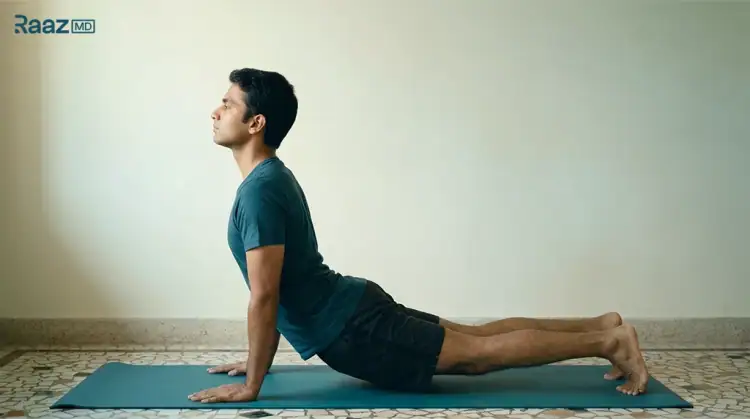
Regular exercise improves blood flow, mood, sleep and weight, and all of these support better erections. Brisk walking, cycling, strength training and yoga poses such as bhujangasana (cobra pose) are good choices. Yoga helps with fitness and stress, but it does not replace thyroid treatment.
- Sleep: aim for 7 to 8 hours. An overactive thyroid disturbs sleep, and poor sleep lowers testosterone.
- Food: a balanced plate of dal, vegetables, fruit, whole grains and some protein at each meal. Use iodised salt, but do not take iodine or kelp supplements on your own, because too much iodine can also upset the thyroid.
- Habits: cutting down alcohol and quitting smoking or gutkha helps erections whatever the cause.
- Fertility: thyroid imbalance can also affect sperm. If you are trying for a baby, ask your doctor about a semen analysis.
Thyroid and sex problems in India: ashwagandha, shilajit and testing
Thyroid problems are common in India: an eight-city study found hypothyroidism in about 1 in 10 adults, and about a third of them did not know they had it. Ashwagandha and shilajit are often tried first, but neither is proven to treat thyroid-related ED or PE, and ashwagandha can make an overactive thyroid worse.
The study in the Indian Journal of Endocrinology and Metabolism tested over 5,300 adults in Bangalore, Chennai, Delhi, Goa, Mumbai, Hyderabad, Ahmedabad and Kolkata. About 5% of men had hypothyroidism, and another 8% of all adults had the mild, subclinical form. Inland cities had higher rates than coastal ones. Thyroid problems are more common in women, which is exactly why men rarely think of checking.
At the same time, about 1 in 4 men struggle with ED and PE. Put those two facts together and it is clear that many Indian men are treating a sex problem without knowing their thyroid is part of it.
Ashwagandha: what the evidence says
Ashwagandha is the most popular herbal choice for both thyroid and "stamina" in India. A small Indian trial of 50 people with subclinical hypothyroidism found ashwagandha root extract improved thyroid blood tests over 8 weeks. That is interesting, but it has not been shown to treat erectile dysfunction or PE caused by the thyroid.
There is also a real downside. Ashwagandha can raise thyroid hormone, and doctors have reported cases where it triggered an overactive thyroid. If you already have hyperthyroidism, or you take levothyroxine, it can push your levels too high. Tell your doctor before starting it, and mention it before any thyroid test.
Shilajit and "josh" medicines from hakims
Shilajit has no good evidence for thyroid-related sex problems, and poorly processed or unregulated products can contain heavy metals. The unlabelled "josh badhane wali dawa" sold by roadside hakims and some online sellers is a bigger worry. Some such products have been found to contain hidden prescription drugs or steroids, which can be dangerous if you have a racing heart from an overactive thyroid.
If a remedy promises a permanent cure in days, treat that as a warning sign. A blood test costs far less than months of the wrong treatment.
Getting tested privately
You do not need to explain anything at a counter. Most large labs in Indian cities offer home sample collection for a thyroid profile, and reports arrive on your phone. This suits men living in joint families or small towns who want privacy.
A few practical tips:
- If you take biotin (common in hair and skin supplements), tell your doctor, as it can distort thyroid results. Ask whether to pause it before the test.
- Take the test at a similar time of day each time, so repeat results are easier to compare.
- If you already take thyroid medicine, ask your doctor whether to take your dose before or after the blood sample.
Finally, talk to your partner. In many Indian homes, especially in the first years of marriage, a sex problem turns into silence, blame or family pressure about children. Explaining that a hormone problem is behind it, and that it is treatable, takes a lot of weight off both of you. If you want to know what a doctor-led plan with Raaz involves, you can see the plans and costs here.
When should you see a doctor, and which tests do you need?
See a doctor if a sexual problem lasts more than a few weeks, starts suddenly, or comes with thyroid signs such as unexplained weight change, a racing heart, tremor, constant tiredness or a swelling in the neck. A simple blood test (TSH, with free T4 and T3) usually shows whether your thyroid is involved.
Red flags: see a doctor promptly
- Chest pain, palpitations or a heartbeat that feels irregular
- A lump or fast-growing swelling in the neck, or trouble swallowing
- Rapid, unexplained weight loss
- Bulging, gritty or painful eyes
- A sudden loss of erections along with other new symptoms
The thyroid test panel explained
| Test | What it measures | What it tells you |
|---|---|---|
| TSH | The brain's signal to the thyroid | The best first test. High usually means underactive; low usually means overactive. |
| Free T4 | The main thyroid hormone in usable form | Confirms whether the thyroid problem is full-blown or mild (subclinical). |
| T3 or free T3 | The active form of thyroid hormone | Useful mainly when an overactive thyroid is suspected. |
| Anti-TPO antibodies | Immune attack on the thyroid | Points to Hashimoto's thyroiditis as the cause. |
| Testosterone, prolactin, blood sugar | Other hormones and diabetes | Added if a doctor wants to rule out other root causes of ED or low desire. |
Your report shows the lab's normal range next to each value, and ranges vary slightly between labs, so let a doctor read the full picture rather than judging one number. If you already take thyroid medicine and a new sex problem has started, simply ask for a TSH recheck. It is often the quickest answer.
A physician or endocrinologist manages the thyroid itself. A doctor experienced in men's sexual health can look at the thyroid alongside the other root causes and treat the sex problem at the same time.
The bottom line: if your erections, timing or desire have changed and you also feel unusually tired, jittery, or your weight has shifted, get your thyroid checked. It is one of the most treatable causes of sexual problems in men, and in most cases things improve once your levels are right. Just remember it is rarely the only factor, so look at the whole picture.
Raaz has done 50,000+ doctor consultations with men asking exactly these questions. Take the free Men's Test now: it takes about 2 minutes and it is private. If you then choose a consultation, a Raaz doctor uses your answers to find your root cause and suggest the right tests.
Frequently asked questions
Can hypothyroidism cause erectile dysfunction?
Yes. Reviews estimate that 59 to 63% of men with an underactive thyroid have some sexual problem, most often erectile dysfunction, delayed ejaculation or low desire. Low thyroid hormone changes testosterone levels, can raise prolactin and weakens the blood vessel response an erection needs. A TSH blood test can confirm it, and erections often improve once thyroid levels are back to normal.
Can hyperthyroidism cause premature ejaculation?
Yes. In one multicentre study, half of men with an overactive thyroid had premature ejaculation. After treatment brought their thyroid levels back to normal, that fell to 15%, and average time to ejaculation rose from about 2.4 to 4 minutes. If PE has started suddenly along with weight loss, a racing heart, tremor or anxiety, ask a doctor to check your thyroid.
Does thyroid medication cause erectile dysfunction?
At the right dose, thyroid replacement medicine does not usually cause ED; it is more likely to help. Problems can appear if the dose is too high, because too much thyroid hormone acts like an overactive thyroid and can bring on anxiety or early ejaculation. Never stop or change your thyroid medicine on your own. Ask your doctor to recheck your TSH instead.
Can thyroid problems lower sex drive in men?
Yes. Both an underactive and an overactive thyroid can reduce desire. With hypothyroidism, tiredness, low mood and hormone changes often dull interest in sex; with hyperthyroidism, anxiety and poor sleep can do the same. Research on hypothyroidism and male libido is mixed, so if low desire continues after your thyroid is normal, testosterone, stress and relationship factors are worth checking.
Is thyroid-related erectile dysfunction permanent?
In most men, no. Studies that rechecked men 8 to 16 weeks after their thyroid levels returned to normal found clear improvement in erections, ejaculation timing and desire, and a 2024 review called the effect reversible. If problems remain after treatment, another cause such as diabetes, low testosterone or stress may be adding to it, and that is treatable too.
Can ashwagandha or shilajit fix thyroid-related sex problems?
Not reliably. A small Indian trial found ashwagandha improved thyroid blood tests in mild (subclinical) hypothyroidism, but it has not been shown to treat thyroid-related ED or PE. It can also raise thyroid hormone, and cases of ashwagandha-triggered overactive thyroid are reported. Shilajit has no thyroid evidence, and unregulated products can contain heavy metals. Check with a doctor first.