Premature ejaculation treatment usually combines three things: simple techniques such as stop-start and squeeze, prescription medicine or a numbing spray where needed, and treating the root cause, whether that is anxiety, a thyroid problem or erection trouble. PE is common and treatable, and with a doctor's help many men gain real control. How quickly depends on the cause and the person.
Raaz has carried out 50,000+ doctor consultations, and PE is one of the problems we see most often: "1 in 4 men struggle with ED and PE". If you are reading this late at night and feeling low about it, you are far from alone, and a lot can be done.
PE often overlaps with erection and desire problems. To see where it fits, read about common sexual problems in men and their causes. Below you will find the real causes, the medicines and techniques that have evidence behind them, an honest look at ayurveda and homeopathy, what drives the cost of treatment in India, and when to see a doctor.
What is premature ejaculation?
Premature ejaculation (PE) means regularly ejaculating sooner than you or your partner want, often within about a minute of penetration, and feeling unable to delay it. It is one of the most common sexual problems in men, and it is treatable.
You may also have seen it searched as shighrapatan, the Hindi term. Whatever you call it, it is a medical condition, not a flaw in your character or a sign of "weakness". Nearly every man finishes too quickly now and then, especially with a new partner or after a long gap. That on its own is not PE. Doctors start to think of PE when it happens nearly every time, has gone on for months, and is causing you distress.
Lifelong vs acquired PE: why the type matters
The International Society for Sexual Medicine (ISSM) guideline describes two main types:
- Lifelong PE: ejaculation that always or nearly always happens within about 1 minute of penetration, from your very first sexual experiences.
- Acquired PE: you used to last longer, but there has been a clear drop, often to about 3 minutes or less.
The type matters because it points to the cause. Lifelong PE is thought to be linked mostly to brain chemistry and genes, so it usually needs ongoing treatment to stay under control. Acquired PE often has a trigger that can be found and fixed, such as anxiety, a thyroid problem, prostate inflammation or erection trouble. That is why two men with the same complaint can need very different treatment.
How common is premature ejaculation?
Very common. Almost every man has finished too quickly at some point, and a smaller group has it most of the time, which is when doctors call it PE. It affects men of every age, from their twenties to their sixties. For the Indian numbers in detail, see how common PE and ED are in India.
Is it premature ejaculation or erectile dysfunction?
They are different problems. PE is about climaxing too soon. Erectile dysfunction (ED) is about difficulty getting or keeping an erection firm enough for sex.
They often get mixed up, though, and they can feed each other. Some men with weak erections learn to rush, because they are afraid of losing the erection before they finish. Over time this looks exactly like PE. When both problems are present, doctors often deal with the erection problem first, because fixing it can improve the timing too. If this sounds like you, read our guide to erectile dysfunction causes and treatment.
What causes premature ejaculation?
PE rarely has one single cause. It can come from brain chemistry (serotonin), anxiety or stress, a thyroid or prostate problem, coexisting erection trouble, or daily habits, which is why the same pill does not work for every man.
This is the core idea behind how Raaz treats PE: find the root cause first, then treat it. Here is what doctors look for.
Physical and medical causes
- Serotonin and brain signalling: serotonin is a brain chemical that helps control when you ejaculate. Men with lower serotonin activity tend to ejaculate faster. This is the main theory behind lifelong PE, and it is why many PE medicines work on serotonin.
- Genes: lifelong PE sometimes runs in families.
- Thyroid problems: the NHS lists both an overactive and an underactive thyroid among the physical causes, and an overactive thyroid is the classic one. It is easy to check with a blood test. Read more on how thyroid problems affect ejaculation.
- Prostate inflammation or infection (prostatitis): this can make ejaculation faster and sometimes painful. The NHS lists prostate problems as a common physical cause too.
- Erection trouble: as explained above, rushing to finish before an erection fades can turn into a habit.
- Diabetes, high BP and high cholesterol: these mainly damage the blood vessels and nerves that erections depend on. When erections weaken, many men start to rush, so these conditions can show up as PE as well.
- Recreational drugs: these can also change ejaculation timing.
- Penile sensitivity: some men have a more sensitive glans (the head of the penis), which is one reason numbing creams help some men.
Psychological and relationship causes
The mind has a big say in when you ejaculate. The most common psychological causes are:
- Performance anxiety: worrying about finishing early makes you tense, and tension makes you finish earlier. It becomes a loop.
- Stress and depression: work pressure, money worries or low mood can all affect sexual control. Read more on how stress and anxiety cause premature ejaculation.
- Early rushed experiences: many Indian men grow up in joint families or shared rooms with little privacy. If your early sexual experiences, including masturbation, were always hurried for fear of being caught, your body may have learnt to finish fast. The NHS calls this conditioning, and it can be unlearnt.
- Guilt or a strict upbringing around sex: feeling that sex is shameful can create tension that shows up as PE.
- Relationship strain: conflict, long distance, or pressure after marriage (including pressure from the family to have a baby) can all play a part.
- A new partner or a long gap: high excitement often means finishing faster for a while. This usually settles on its own.
Habits and lifestyle common in India
Alcohol, smoking, gutkha and other chewing tobacco, poor sleep and a lack of exercise are not proven direct causes of PE. But they harm overall sexual health, raise the risk of erectile dysfunction and make anxiety worse, all of which can feed into PE. Long hours at a desk and late nights on the phone do not help either.
Better fitness, steady sleep and less alcohol support every other part of treatment. For practical steps, see our guide on how to increase sex stamina and last longer.
Cause, clue and what helps: a quick table
| Possible cause | Clue you might notice | What usually helps |
|---|---|---|
| Brain chemistry (serotonin), often lifelong | It has happened since your first sexual experiences, with every partner | Prescription medicine plus techniques, usually long term |
| Performance anxiety or stress | Worse with a new partner or when you are worried; better when relaxed or alone | Techniques, counselling, sometimes short-term medicine |
| Erection trouble (ED) | You rush because you fear losing the erection; erections are weaker than before | Treating the ED, then reassessing the timing |
| Thyroid problem | PE started later, along with weight change, a racing heart, sweating or feeling jittery | A thyroid blood test; treating the thyroid often helps the timing |
| Prostate inflammation or infection | Burning while passing urine, pelvic pain, or pain during or after ejaculation | A doctor's assessment, a urine test and treatment of the cause |
| Relationship strain | The problem began around conflict, distance or pressure to conceive | Open conversation and couples counselling |
| Habits: alcohol, tobacco, gutkha, poor sleep | Low energy, poor stamina, weaker erections | Cutting down, sleep and exercise, alongside treatment |
Why your cause matters more than a generic pill
Most men have more than one of these at once. A man whose PE comes from anxiety needs something different from a man whose erections are fading because of diabetes, or a man with an untreated thyroid problem. Handing all three the same tablet is why so many men say "I tried medicine and it did not work".
That is why, at Raaz, doctors look at five areas before suggesting treatment: nutrition, hormones (such as thyroid and testosterone), stress and sleep, habits (smoking, alcohol, gutkha), and conditions like diabetes, BP and cholesterol. The plan then targets what is actually behind your PE.
Your premature ejaculation may not need the same fix as the next man's. Take the free, private Men's Test. It takes about 2 minutes and helps pinpoint what is likely behind yours.
Can premature ejaculation be cured permanently?
Often yes for acquired PE, once the cause (such as anxiety, a thyroid problem or erection trouble) is treated. Lifelong PE is usually controlled well rather than cured outright.
Either way, most men get real, lasting improvement with the right mix of treatment. Here is the honest picture. If your PE started later because of a specific trigger, treating that trigger can resolve it completely. A man whose PE came from an overactive thyroid, for example, often finds his timing returns to normal once the thyroid is treated.
Lifelong PE is different. Medicines work well while you take them, but the effect often fades after stopping. One study summarised in a 2021 systematic review of PE treatment found that about two in three men had PE again within 6 months of stopping a daily SSRI. Techniques like stop-start also tend to lose their effect if you stop practising them.
That is not a reason to lose hope. It means the best results come from combining approaches: medicine for quick control, techniques and counselling to build lasting skill, and fixing any underlying cause. The same review found that combination treatment worked better than any single treatment alone. The most common reasons gains fade are stopping treatment too early and treating only the symptom, never the cause. Be wary of anyone who promises a "100% permanent cure" in a few days.
What treatments work for premature ejaculation?
The treatments with the best evidence are behavioural techniques (stop-start, squeeze, pelvic floor exercises), prescription medicines such as dapoxetine and other SSRIs, numbing creams or sprays, and counselling. Many men do best on a combination chosen by a doctor to suit their cause.
| Treatment | How it helps | How quickly | What to watch for |
|---|---|---|---|
| Stop-start, squeeze, pelvic floor exercises | Teach you to sense and control the point of no return | A few weeks of regular practice | Needs patience; gains fade if you stop practising |
| Dapoxetine (on-demand SSRI) | Raises serotonin activity for a few hours to delay ejaculation | Can help from the first use | Prescription only; nausea, headache, dizziness; not for some heart, liver or kidney conditions |
| Daily SSRIs | Steady rise in serotonin activity delays ejaculation | Full effect usually after 1 to 2 weeks | Prescription only; side effects; PE often returns if stopped too soon |
| Numbing cream or spray | Reduces sensitivity of the penis | Works from the first use | Too much numbness, a softer erection, numbness passing to your partner |
| ED medicine (sildenafil, tadalafil) | Treats erection trouble so you stop rushing | From the first use | Prescription only; only helpful when ED is also present; never with nitrate heart medicines |
| Counselling or couples therapy | Breaks the anxiety loop and eases relationship strain | A few sessions to a few months | Works best alongside other treatment |
| Surgery, Botox, fillers | Claimed to reduce sensitivity permanently | Not applicable | Experimental; risk of lasting numbness; not recommended |
Stop-start, squeeze and pelvic floor exercises
These techniques teach you to recognise the point of no return and pull back from it. They cost nothing and have no side effects. Practise them alone first, then with your partner.
The stop-start technique:
- Start stimulation (alone or with your partner) and pay attention to how aroused you feel.
- When you feel close to climax, stop all stimulation completely.
- Wait until the urge settles, usually for 30 seconds or so.
- Start again. Repeat this three or four times before allowing yourself to ejaculate.
The squeeze technique:
- Follow the same steps, but when you feel close to climax, you or your partner firmly squeeze the head of the penis, where it meets the shaft.
- Hold the squeeze for 10 to 20 seconds, as the NHS describes, until the urge passes.
- Let go, wait about 30 seconds, then carry on.
The NHS also suggests a few simple things to try: masturbating an hour or two before sex, using a thicker condom to reduce sensation, and having sex with your partner on top so they can pull away when you are close. See our guide to the best positions to delay ejaculation for more.
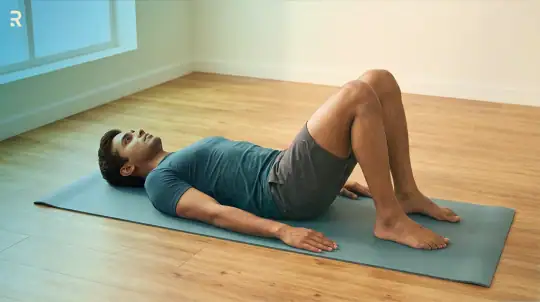
Pelvic floor exercises strengthen the muscles that help control ejaculation. Squeeze the muscles you would use to stop urine midstream, hold for a few seconds, relax, and repeat, a few sets a day. Our step-by-step guide to Kegel exercises for premature ejaculation explains how to find the right muscles. Some men also find these yoga poses for premature ejaculation help with relaxation and body awareness.
On their own, these techniques help some men, but the results can fade. They work best alongside medicine and, where needed, counselling.

SSRIs and dapoxetine (prescription only)
SSRIs (selective serotonin reuptake inhibitors) are medicines that raise serotonin activity, which delays ejaculation. They are the most studied medicines for PE. Doctors use them in two ways:
- Daily SSRIs: medicines such as paroxetine, sertraline and fluoxetine were first made for depression, but they also delay ejaculation. According to the NHS, some men notice a change within a few days, but it usually takes 1 to 2 weeks for the full effect.
- Dapoxetine, taken only when needed: this is an SSRI developed specifically for PE. It acts faster and is taken a few hours before sex instead of every day. It is sold in India on prescription.
The ISSM guideline rates the evidence for both approaches as strong. Like any medicine, though, they have side effects, such as nausea, headache, dizziness or tiredness, and they are not suitable for everyone. The NHS notes that dapoxetine is not recommended for some men with heart, kidney or liver problems, and it can interact with other medicines, including other antidepressants. That is why they are available only on a doctor's prescription, and why the doctor, not a website, should decide which one you take and how.
A warning that matters in India: tablets that combine dapoxetine with sildenafil or tadalafil are widely sold online, often without anyone asking for a prescription. They still need one. Combining two medicines adds up the possible side effects, and some men, such as those with heart problems or on certain heart and blood pressure medicines, should not take them at all. Anyone taking nitrates for chest pain must never take sildenafil or tadalafil. Please do not self-medicate.
Numbing creams, sprays and condoms
Local anaesthetic creams and sprays, usually containing lidocaine or prilocaine, reduce sensation in the penis so you can last longer. You apply them a short while before sex, as your doctor or the pack directs.
They work: the ISSM guideline rates the evidence for topical anaesthetics as strong. The main downsides are too much numbness, a softer erection in some men, and numbness passing to your partner. The NHS notes that using a condom helps prevent that, and that condoms, especially combined with a numbing cream, can help on their own too. Many "delay sprays" are sold over the counter in India, but it is still worth asking a doctor which type suits you and how to use it.
ED medicines when both problems exist
If you have erection trouble as well as PE, your doctor may prescribe an ED medicine such as sildenafil or tadalafil, only on a doctor's prescription. Treating the erection problem often takes away the pressure to rush, which improves timing. The ISSM guideline does not recommend these medicines for PE alone in men whose erections are normal. Never take them with nitrate medicines for chest pain (such as nitroglycerin or isosorbide), and check with a doctor first if you have heart disease or low blood pressure.
Counselling and couples therapy
If anxiety, guilt, stress or relationship problems are part of the picture, talking to a counsellor or a sex therapist can make a real difference. Cognitive behavioural therapy (CBT) helps break the worry loop. Couples therapy helps both partners understand the problem and work on it together instead of blaming each other. The ISSM guideline notes that combining medical and psychological treatment is especially useful for acquired PE.
Your partner is often more understanding than you expect. If you are not sure how to begin, read how to talk to your partner about PE.
Surgery, Botox and fillers: why doctors do not recommend them
You may see clinics in India advertising a "permanent" fix through surgery (such as cutting some of the nerves in the penis, called selective dorsal neurectomy), hyaluronic acid fillers injected into the head of the penis, or Botox injections. These are experimental. They have not been proven safe or effective in good-quality trials, and they can cause lasting loss of sensation or erection problems. The ISSM guideline does not recommend surgery for PE. If a clinic quotes you a price for PE surgery, get a second opinion from a qualified urologist before you spend anything.
Do ayurveda, homeopathy and home remedies work for premature ejaculation?
Mostly unproven. A 2017 systematic review found only a handful of small, unclear-quality trials of herbal and traditional treatments for PE, just one of them ayurvedic, and none of homeopathy.
Ashwagandha, safed musli and shilajit are not proven PE treatments, and some unregulated products carry real risks. Many men try these first because they feel more private or more natural. That is understandable. Here is what the evidence actually shows. For the full list of what you can try at home, see our guide to home remedies for premature ejaculation, fact-checked.
What the research says
The 2017 review in Sexual Medicine looked for every randomised trial of complementary and alternative treatment for PE and found ten: two of acupuncture, five of Chinese herbal medicine, two of a Korean herbal cream (SS-cream), and one of an ayurvedic herbal medicine. The ayurvedic trial showed a small gain of under a minute over a dummy pill. The reviewers called the evidence preliminary, noted that the quality of every study was unclear, and found little data on side effects or drug interactions.
So the honest answer is not "ayurveda is useless". It is that no specific herbal product sold in India has been properly shown to treat PE, and the proven medical treatments above have much stronger evidence.
| Remedy | What it is | Evidence for PE | Main risk |
|---|---|---|---|
| Ashwagandha | An ayurvedic root used for stress and energy | Small studies on stress and sperm quality; no good-quality trials for PE | Product quality varies; may interact with thyroid, diabetes and sedative medicines |
| Safed musli | A root sold as a sexual tonic | Mostly animal studies; no reliable human trials for PE | Purity and strength of products are unknown |
| Shilajit | A mineral-rich resin from mountain rocks | Small studies on testosterone and sperm; none showing it treats PE | Raw or poorly purified shilajit can contain heavy metals |
| Homeopathy | Highly diluted remedies | No controlled trials showing it treats PE | Delays treatment that works |
| Unani and "stamina" capsules or oils sold online | Multi-herb mixes, often with secret formulas | No published evidence for most products | Unknown ingredients, wasted money, heavy metals |
If you still want to try a herbal product, tell your doctor first, and use it alongside proven treatment, not instead of it.
Foods and daily habits that support treatment
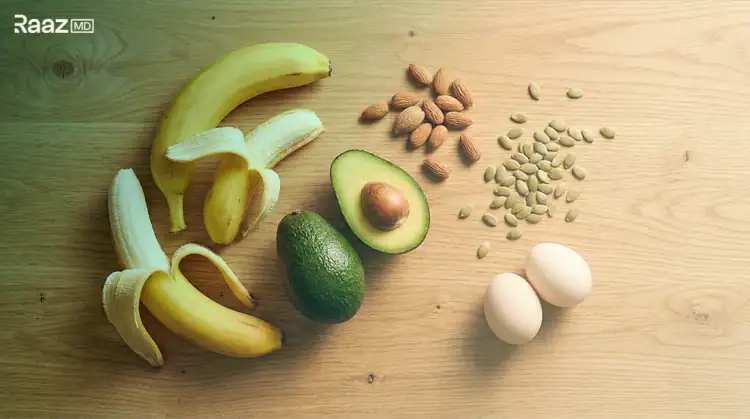
No single food cures PE, but a good diet supports your hormones, energy and blood flow, all of which matter for sex. Useful everyday choices include:
- Zinc-rich foods: pumpkin seeds, eggs, chana and other pulses.
- Magnesium and healthy fats: almonds, walnuts, bananas and leafy greens.
- Whole grains: millets such as jowar, bajra and ragi in place of maida.
- Protein at every meal: dal, paneer, curd, eggs, fish or chicken.
Pair this with 30 minutes of activity most days, 7 to 8 hours of sleep, less alcohol and no tobacco or gutkha. For an Indian meal plan, see our guide to foods that help with premature ejaculation. Diet supports treatment; it does not replace it.
The real risks: heavy metals and neem-hakeem clinics
"Herbal" does not always mean safe. A study in JAMA tested 193 ayurvedic medicines bought online and found that about one in five, whether made in India or the US, contained detectable lead, mercury or arsenic. Products made with metals as ingredients (rasa shastra preparations) were even more likely to contain them. Over time, these metals can harm the kidneys, liver and nerves.
The other risk is money and time. Many men spend months, and a lot of money, at unregistered clinics and with unregulated online sellers, the kind often called neem-hakeem, before they ever see a qualified doctor. Watch for these warning signs:
- A "guaranteed" or "100% permanent" cure in a few days
- Secret powders or medicines with no label or ingredient list
- Expensive "full courses" paid for in advance
- No registered doctor you can name or verify
- Claims that PE is caused by "weakness" from masturbation or nightfall
If you have already spent money this way, you are not foolish; these clinics are very good at selling. The next step is simply to get a proper assessment.
What are the common myths about premature ejaculation in India?
The biggest myths are that PE is all in the mind, that it means weakness, that it stops you from having children, and that herbal products are always safe. None of these is true, and believing them delays real treatment.
- Myth: PE is only psychological. Fact: it can be physical, psychological or both. In most men, both play a part.
- Myth: only young men (or only older men) get it. Fact: PE can happen at any age.
- Myth: PE means you cannot father a child. Fact: PE does not affect sperm. Conception only becomes harder if ejaculation regularly happens before penetration, and that is treatable.
- Myth: masturbation or nightfall causes PE. Fact: there is no good evidence for this. Always rushing masturbation may train the body to finish fast, but that can be unlearnt.
- Myth: herbal means safe. Fact: some unregulated products contain heavy metals, as the JAMA study above showed.
For more, read premature ejaculation myths, fact-checked.
What affects the cost of premature ejaculation treatment in India?
The cost depends on four things: the doctor's fee, whether you need any tests, which medicine (if any) you are prescribed, and how long you need it. There is no single fixed price, and anyone who quotes one "package" for every man is not looking at your cause.
Here is how to keep the cost sensible and your money safe:
- Consultation: you usually need at least one visit with a registered doctor. Online consultations save travel time and keep things private.
- Tests: blood tests such as sugar or thyroid are needed only if the doctor suspects a physical cause. You do not need a long list of tests to start.
- Medicine: generic medicines usually cost much less than big branded ones and contain the same active ingredient. Ask your doctor whether a generic suits you.
- Counselling: worth paying for when anxiety or relationship strain plays a big part.
- What not to pay for: surgery, Botox or filler "packages", and expensive clinic "courses" or secret powders from quacks. These are often the biggest hidden cost, with no proven benefit.
Many men spend more on unproven remedies first than a proper doctor-led plan would have cost them. With Raaz, the Men's Test is free, and you can see current consultation and plan prices before you decide anything.
When should you see a doctor?
See a doctor if PE happens most of the time, has lasted a few months, or is affecting your confidence or relationship. A short, private consultation is usually enough to start, and early help saves time and money.
See a doctor sooner if you notice any of these:
- PE started suddenly after years of normal timing
- You also have erection problems
- Pain during or after ejaculation, or burning when passing urine
- Weight loss, a racing heart or tremors (possible thyroid signs)
- Low mood, anxiety or relationship strain that is getting worse
- You are trying for a baby and it is getting in the way
Which doctor should you see?
A urologist or andrologist is the right choice if you also have erection problems, pain, or urine or prostate symptoms. A qualified sexual-medicine doctor or psychiatrist can help when anxiety is the main issue. Whoever you see, make sure they are a registered doctor with a verifiable medical qualification, not an unregistered "sexologist" clinic. Our guide on which doctor to consult for premature ejaculation explains the options in detail.
What happens in a consultation
Many men delay because they fear an embarrassing examination. In reality, a PE consultation is mostly a conversation. The doctor will ask:
- How long you usually last, and whether it has always been this way
- Whether it happens with every partner and during masturbation
- About your erections, stress, sleep, habits and any medicines you take
- About any urine symptoms, pain or other health conditions
Some doctors also use a short questionnaire, such as the Premature Ejaculation Diagnostic Tool (PEDT), to judge how severe the problem is. A physical examination is often not needed. A blood or urine test is ordered only if a thyroid, hormone or prostate problem is suspected. For most men, an online consultation works well, and it is completely confidential.
Why waiting makes it harder
PE and anxiety feed each other. The longer it goes on, the more you worry before sex, and the more you worry, the faster it happens. Some men start avoiding intimacy altogether, which puts strain on the relationship. Getting help early breaks that loop sooner and usually means simpler treatment.
If you are not sure where to begin, the free Men's Test is a private first step: about 2 minutes of questions, then a doctor can guide you on what to do next.
The bottom line: premature ejaculation is common, it is not your fault, and it is treatable. The men who do best are the ones who find out what is really causing their PE and treat that, instead of trying one remedy after another. Many men who get proper treatment see real improvement, and at Raaz, "97% users saw results". A good first step is the free, private Men's Test, which takes about 2 minutes.
Frequently asked questions
What is the best medicine for premature ejaculation in India?
There is no single best medicine for every man. Dapoxetine, an SSRI made for PE and taken only when needed, is sold in India on prescription. Daily SSRIs, numbing creams or sprays, and ED medicines (when erection problems exist too) are other options. The right choice depends on your cause, your health and other medicines you take, so a doctor should choose it, including for combination tablets sold online.
Do premature ejaculation medicines have side effects?
They can. SSRIs, including dapoxetine, may cause nausea, headache, dizziness or tiredness, and they can interact with other medicines such as other antidepressants. Dapoxetine is not recommended for some men with heart, kidney or liver problems. Numbing sprays can cause too much numbness for you or your partner. That is why a doctor should check your health first and adjust treatment if you feel unwell.
How long does premature ejaculation treatment take to work?
On-demand medicines and numbing sprays can help from the first use, while daily SSRIs usually take one to two weeks to reach their full effect. Techniques like stop-start and pelvic floor exercises need a few weeks of regular practice. How long it takes before the improvement feels reliable depends on the cause and the person, so your doctor will review and adjust treatment along the way.
Can premature ejaculation be treated naturally without medicine?
Sometimes, especially when the cause is anxiety, stress or habit. Stop-start and squeeze techniques, Kegel (pelvic floor) exercises, counselling, less alcohol and better sleep help many men. Men with lifelong PE usually need medicine as well. If a month or two of honest effort has not helped, see a doctor rather than buying more products.
Can premature ejaculation go away on its own?
It can, in some cases. Acquired PE linked to a new relationship, a stressful phase or long gaps between sex often settles once the trigger passes. Lifelong PE, present since your first sexual experiences, rarely goes away on its own but responds well to treatment. If it has lasted more than a few months, getting checked is faster than waiting.
Can premature ejaculation cause infertility?
Not directly. PE does not affect the number or quality of your sperm, and you can still make your partner pregnant. Conception only becomes harder if ejaculation regularly happens before penetration. If you are trying for a baby and this is happening, speak to a doctor, because PE is treatable and fertility can be checked separately if needed.