Can stress cause premature ejaculation? Yes. Stress, tension and anxiety are among the most common reasons men start climaxing sooner than they want to, especially when the problem appears after months or years of normal control. It is not a weakness or a character flaw, and stress-related premature ejaculation (PE) is one of the most treatable kinds.
This guide explains how stress affects the ejaculation reflex, why one bad night can turn into a pattern, how to tell a stress cause from a physical one, why so many Indian men carry this pressure, and what actually helps, from breathing and exercise to the treatments a doctor can offer.
Can stress cause premature ejaculation?
Yes. Stress and anxiety are among the leading causes of premature ejaculation, and they mostly drive the type of PE that starts later in life rather than the kind a man has always had.
Premature ejaculation means regularly climaxing sooner than you or your partner would like, often within about a minute of penetration, most of the time, for several months, and feeling frustrated about it. Many Indian men know it by the Hindi word shighrapatan. It is very common: "1 in 4 men struggle with ED and PE", and the Cleveland Clinic estimates that 30 to 40% of men experience PE at some point in their lives. It is also treatable.
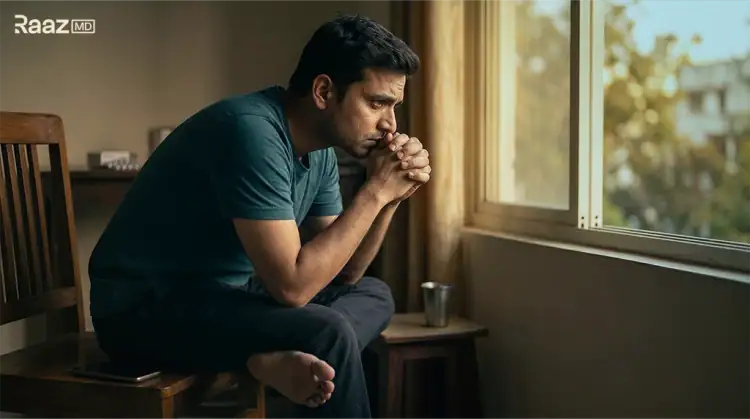
Doctors describe two main types of PE, and the difference matters when you are asking whether stress is the cause:
- Lifelong PE: it has been there since your very first sexual experiences. This type is linked more to brain chemistry, genes and nerve sensitivity.
- Acquired PE: you used to last longer, and then control dropped. This is the type where stress, anxiety, relationship strain and new health problems most often play a part.
There is Indian evidence for this link. A 2014 study from JIPMER, Puducherry reviewed the records of 28 men treated at a psychosexual clinic. Anxiety during sex, such as anticipatory worry, a racing heart, trembling or breathlessness, was found in 7 of 10 men with acquired PE (70%) but in only 1 of 12 men with lifelong PE (about 8%). The authors suggested that anxiety may cause or keep acquired PE going. It is a small study, but it matches what doctors see every day in clinic.
Stress is rarely the whole story, though. For the full picture of causes, medicines and techniques, read our guide to premature ejaculation treatment options.
How does stress cause premature ejaculation?
Stress switches on your body's fight-or-flight system. That same system also controls ejaculation, so when you are tense and on edge, the reflex fires faster and you have less control over it.
Fight-or-flight: the same switch that triggers ejaculation
Your body has two "gears" in its automatic nervous system. The calm gear (the parasympathetic system) helps you relax and get aroused. The alert gear (the sympathetic system) prepares you for danger by releasing adrenaline and cortisol, the main stress hormones.
Here is the catch: ejaculation itself is triggered by the alert gear. When you are stressed, that system is already switched on before sex even begins. So you reach the point of no return sooner, and it becomes harder to hold back. This is why many men notice they last longer on a relaxed holiday and much shorter during a tense month at work.
Tight pelvic floor muscles
The pelvic floor is the group of muscles under your bladder and around the base of the penis. These muscles contract rhythmically during ejaculation. Anxiety makes many people clench them without noticing, the same way you might clench your jaw or shoulders.
The International Society for Sexual Medicine notes that anxiety can cause involuntary contraction of these muscles. Muscles that are already tight and overactive can tip into the ejaculation reflex more easily. That is one reason pelvic floor training, which teaches you to relax these muscles as well as tighten them, helps many men.
Serotonin, the brain chemical that helps delay climax
Serotonin is a chemical messenger in the brain that affects mood, sleep and also how quickly you ejaculate. Medicines that raise serotonin activity, called SSRIs, delay ejaculation. This is one of the reasons researchers link low serotonin signalling with PE.
Long-term stress, poor sleep and depression can all affect how the brain's chemical systems work. This does not mean you have a "chemical imbalance" that only a pill can fix. It means your mood, your sleep and your sexual timing are connected, so improving one often helps the others.
What the research shows
The research on stress and PE is still growing, so it is worth being honest about what it does and does not prove. A 2022 conference abstract in European Psychiatry compared 60 men with acquired PE to 60 healthy men. In the men with PE, how severe their PE was tracked closely with symptoms of traumatic stress, and also with their cortisol levels. These links were weak or absent in the healthy men.
That is a meaningful signal, but it is a short abstract, not a full peer-reviewed study, and it shows a link, not proof that stress hormones cause PE. What the research as a whole supports is simpler: anxiety and stress are consistently tied to acquired PE, and reducing them helps.
Can anxiety or performance pressure cause premature ejaculation?
Yes. One disappointing night makes you worry about the next one, that worry makes you tense, and the tension makes PE more likely, so the cycle feeds itself. The good news is that a cycle can be broken.
The performance anxiety loop
Performance anxiety is worry about how you will do in bed. It usually runs like this:
- You finish sooner than you hoped, once or twice.
- Before the next time, you start thinking, "What if it happens again?"
- During sex, you watch and judge yourself instead of enjoying the moment.
- Your body reads that worry as danger, the alert system switches on, and you climax quickly again.
- Each episode confirms the fear and makes the next one more likely.
Some men start avoiding sex, or rushing through it to "get it over with", which only strengthens the habit of finishing fast. Breaking the loop means taking the pressure off sex while building real control, which is exactly what the steps later in this guide are designed to do.
Overthinking during sex
Doctors call the habit of mentally watching yourself during sex "spectatoring". Instead of feeling touch and pleasure, your mind is busy counting minutes, checking your partner's face and predicting failure. Overthinking keeps the stress system switched on, and it also pulls you away from the body signals that tell you when you are getting close, which are the very signals you need to notice to slow down.
Depression, low desire and relationship strain
Low mood, low desire and tension with your partner can all feed PE. Depression drains confidence and energy, and low desire can make sex feel like a duty to be finished quickly. Unresolved arguments or distance in a relationship add their own layer of pressure.
It often works the other way round too. In the JIPMER study, the doctors found that marital conflict was usually a result of PE rather than its cause. That is useful to know: fixing the PE, with your partner involved, often eases the strain at home as well.
Life changes that can trigger it
If you have noticed PE only recently, look at what else changed around the same time. Common triggers for acquired PE include:
- A new relationship, engagement or marriage
- Job pressure, job loss, money worries or exams
- A family illness, a death, or conflict at home
- Poor sleep over weeks or months
- A new health problem, such as difficulty with erections or a thyroid problem
A sudden change is actually encouraging. It means your body was able to last longer before, and with the right help it usually can again.
Is your premature ejaculation caused by stress or something physical?
Often it is both. Some clues point towards stress and others towards a physical cause, but only a doctor's check can confirm which applies to you.
This is the core of how Raaz approaches PE. The same symptom, finishing too soon, can have very different root causes in two different men: stress and sleep, hormones such as thyroid, habits like alcohol, smoking and gutkha, or conditions such as erection problems and prostate inflammation. That is why handing everyone the same tablet often fails, and why finding your cause comes first.
Use this table as a rough guide. These are clues, not a diagnosis:
| Clues that point to stress | Clues to check for a physical cause |
|---|---|
| It started during a stressful phase in your life | It has been there since your very first sexual experience |
| You last longer when you are relaxed, on holiday or masturbating alone | It happens in every situation, however relaxed you are |
| Your erections are firm and reliable | You also have trouble getting or keeping an erection |
| It is worse with a new partner or after an argument | You have pain, burning or discomfort when urinating or ejaculating |
| You feel anxious, tense or distracted before and during sex | You have weight loss, palpitations, heat intolerance or tremors, which can point to thyroid trouble |
Many men tick boxes in both columns. That is normal, because a physical problem often creates anxiety, and that anxiety then makes PE worse.
Psychological causes
- Stress and anxiety: work, money, family or health worries.
- Performance anxiety: fear of not lasting long enough or disappointing your partner.
- Depression: the NHS lists depression, stress, relationship problems and anxiety about sexual performance among the psychological causes of PE.
- Past experiences: early rushed sexual experiences, a strict upbringing around sex, or a traumatic or shaming experience.
Physical causes a doctor will rule out
- Thyroid problems: an overactive thyroid in particular is linked to PE. Our guide to thyroid and sexual problems in men explains the signs.
- Prostate inflammation (prostatitis): may come with pain, burning or discomfort.
- Erectile dysfunction: some men rush sex because they fear losing their erection.
- Hormonal changes: the Cleveland Clinic lists changes in hormones such as prolactin and thyroid-stimulating hormone.
- High penile sensitivity: more common in lifelong PE.
- Some medicines and recreational drugs: worth mentioning to your doctor if PE began after starting something new.
Habits that make it worse
Alcohol, smoking, gutkha and khaini, recreational drugs and poor sleep all affect nerves, blood flow and mood. None of them helps you last longer, even when a drink seems to calm your nerves, and several are linked to erection problems that can then trigger PE. Read more on how gutkha and khaini affect erections.
Not sure whether stress or something physical is behind your PE? Take the free, private 2-minute Men's Test. It helps you understand the likely causes of your symptoms, so a doctor can look at the right thing first.
Why do so many Indian men feel this pressure?
Indian men often carry extra stress into the bedroom: first-night expectations after an arranged marriage, family pressure to have a baby soon, little privacy in joint families, myths about semen loss, and a culture where nobody talks about sex. That makes stress-driven PE both more common and slower to get treated.
Marriage, family and the first night
Many men in India have limited sexual experience before marriage, and then face huge expectations on the first night, often with a partner they have known for only a few weeks or months. Films, friends and pornography add unrealistic ideas of how long sex "should" last. It is very common for a man to finish quickly the first few times, and just as common for that one experience to start the anxiety loop described above.
Within a year or two, many couples also face questions from parents and relatives about when a baby is coming. Sex that is scheduled around fertile days, under family pressure, can feel more like a test than intimacy. That pressure alone can bring on PE in a man who never had it before.
Joint families, privacy and rushed sex
Living with parents, in-laws or siblings, often with thin walls and shared rooms, means many couples have sex quietly and quickly, worried about being heard or interrupted. The NHS notes that early experiences, such as a teenager rushing to avoid being caught masturbating, can condition a man to ejaculate quickly. Over months and years, the body can learn to finish fast as a habit. The good news is that a learned habit can be unlearned with practice.
Semen-loss worry and masturbation guilt
Many Indian men grow up hearing that losing semen, through masturbation or nightfall, drains strength and harms health. Indian psychiatrists call this pattern Dhat syndrome. A 2021 review in the Indian Journal of Psychiatry describes it as undue worry about the weakening effects of semen loss, often seen alongside anxiety, depression and sexual problems such as PE and erection difficulties.
Semen loss does not weaken your body, and masturbation does not damage your ability to last. But the guilt and fear these myths create are real, and they add exactly the kind of anxiety that makes PE worse.
Stigma, neem-hakim clinics and "stamina" capsules
Because PE is still treated as a shameful "gupt rog" (secret disease), many men never tell a doctor. Instead they turn to roadside clinics, unqualified "specialists" advertising on walls and in newspapers, or neem-hakim treatments. Men often spend thousands of rupees at these places with no result, and the anxiety only grows. Part of the problem is real: good sexual-health doctors are scarce outside big cities, and many men have no private way to reach one.
Unregulated "stamina" and "timing" capsules sold online or over the counter are a particular concern. Some products sold as herbal have been found to contain undeclared prescription drugs or heavy metals, which can harm your liver, kidneys and heart. If a product promises a permanent cure in days, or will not tell you exactly what is inside, it is best avoided.
What about ashwagandha?
Ashwagandha is one of the most searched remedies for both stress and PE in India, so it deserves an honest answer. A 2012 Indian randomised controlled trial of 64 adults with chronic stress found that 60 days of ashwagandha root extract lowered stress scores by about 44%, compared with 5.5% on placebo, and lowered blood cortisol by about 28%, compared with 8% on placebo.
That is promising for stress. But there is no good-quality evidence that ashwagandha treats premature ejaculation itself. It may help some men feel calmer, which could help indirectly, but it is not a PE treatment. Rare cases of liver injury have been reported, and it can interact with medicines, including those for thyroid, diabetes, blood pressure and sleep, so check with a doctor before starting it. For an evidence check of other popular options, see our guide to ashwagandha and other home remedies for PE.
What actually helps with stress-related premature ejaculation?
The best results come from calming the stress response and retraining control together: slow breathing, regular exercise, pelvic floor training, stop-start practice, better sleep, less alcohol and tobacco, and an honest talk with your partner. These work best alongside a doctor's assessment, not as a replacement for one.
Slow breathing and mindfulness
Slow breathing is the quickest way to shift your nervous system from the alert gear to the calm gear. Try this daily, and again before and during sex:
- Breathe in slowly through your nose for about 4 seconds, letting your belly rise.
- Pause briefly.
- Breathe out through your mouth for about 6 seconds.
- Repeat for 5 minutes.
Mindfulness means paying attention to what you feel right now instead of worrying about what might happen. During sex, gently bring your attention back to touch and sensation whenever your mind starts judging your performance. It feels awkward at first and gets easier with practice.
Exercise and yoga
Regular physical activity lowers stress hormones, improves sleep and mood, and helps erections by improving blood flow. Aim for about 30 minutes of brisk walking, cycling, swimming or sport on most days. Yoga adds breathing control and body awareness, which many men find especially useful for PE. For a step-by-step routine, read our guide to yoga and pranayama for PE.
Kegel (pelvic floor) exercises
Kegel exercises strengthen the pelvic floor and, just as importantly, teach you to relax it. To find the right muscles, imagine stopping the flow of urine midway (do not practise this while actually urinating). Squeeze for a few seconds, then fully relax for the same time, and build up gradually over weeks. Small studies suggest regular pelvic floor training can improve ejaculation control. Our doctor's guide to pelvic floor (Kegel) training walks you through it.
Stop-start and squeeze techniques
These behavioural techniques, recommended by the NHS and the Cleveland Clinic, help you learn to recognise the point just before climax and stay below it:
- Stop-start: during masturbation or with your partner, stop all stimulation when you feel close to climax. Wait about 30 seconds until the urge fades, then start again. Repeat three or four times before allowing yourself to finish.
- Squeeze: when you feel close, you or your partner gently squeezes the head of the penis, where it joins the shaft, for several seconds until the urge passes. Then continue.
Practise on your own first, without any pressure, then with your partner. Most men need a few weeks of regular practice to see a difference. Our guide to home remedies for premature ejaculation has more simple techniques to try.
Sleep, alcohol and tobacco
- Sleep: aim for 7 to 8 hours. Poor sleep raises stress and lowers mood and sexual energy.
- Alcohol: a drink may seem to calm nerves, but regular or heavy drinking harms erections, and many men end up relying on it before sex.
- Tobacco: cigarettes, bidis, gutkha and khaini damage blood vessels and are linked to erection problems, which can in turn trigger PE. Quitting helps both.
Talking to your partner
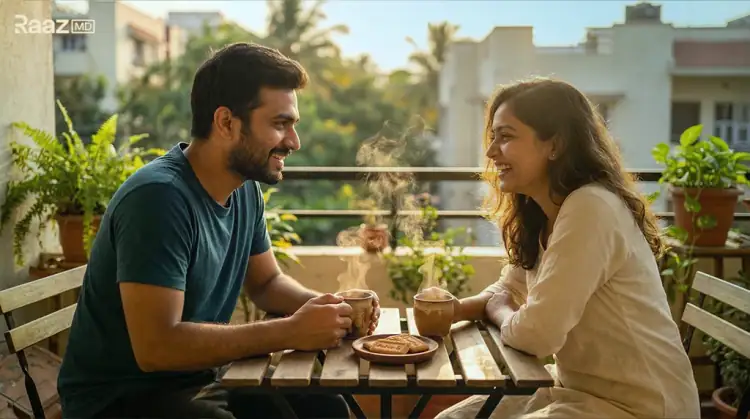
Silence feeds anxiety. Many men try to hide PE, and their partner may wrongly think the problem is lack of interest or attraction. A calm, honest talk, outside the bedroom and at a relaxed moment, usually lowers the pressure on both of you.
It also helps to widen what sex means for you as a couple: more time on touch and foreplay, and less focus on penetration and the clock. When your partner knows what you are working on, practising techniques together becomes teamwork instead of a test. For practical ways to start, read our guide to talking to your partner about premature ejaculation.
How do doctors treat stress-related premature ejaculation?
Treatment depends on the cause. It can include counselling or CBT to break the anxiety loop, prescription medicines that delay ejaculation, numbing creams, or treating an underlying problem such as a thyroid problem, erection difficulty or depression.
Counselling, CBT and sex therapy
Psychosexual counselling or cognitive behavioural therapy (CBT) helps you notice and change the anxious thoughts that trigger PE, and teaches behavioural techniques in a structured way. It is especially useful when stress or relationship problems are the main driver, and it often works best when your partner joins some sessions.
Medicines, only on a doctor's prescription
- SSRIs: certain antidepressants delay ejaculation as a side effect, and doctors use them for PE. They have side effects and can interact with other medicines, so they are used only on a doctor's prescription.
- Dapoxetine: an SSRI developed specifically for PE and taken before sex, again only on a doctor's prescription, after an assessment of your health.
- Numbing creams or sprays: local anaesthetics such as lidocaine reduce sensitivity of the penis and can delay climax. A doctor can advise how to use them so they do not numb your partner too.
- Medicines for erection problems: if PE comes with erectile dysfunction, the NHS notes that medicines such as sildenafil may help, and treating the erection problem often improves timing too. These are also prescription only. Never take them with nitrate medicines for chest pain (such as nitroglycerin or isosorbide), and check with a doctor first if you have heart disease or low blood pressure.
- Treating the root cause: correcting a thyroid problem, treating prostatitis or treating depression can improve PE on its own.
Medicines work best when combined with the techniques above, and they are not a promise of a permanent cure. At Raaz, a doctor first works out what is driving your PE, then builds a personalised plan around it. You can compare medicines and techniques in our complete guide to premature ejaculation treatment.
When should you see a doctor?
See a doctor if PE happens most times you have sex, has lasted more than a few months, comes with erection problems, pain or burning, or is hurting your confidence or relationship. Waiting usually gives the anxiety loop time to settle in.

Book an appointment sooner rather than later if you notice any of these:
- PE that started suddenly along with other new symptoms
- Difficulty getting or keeping an erection
- Pain in the pelvis or testicles, pain while ejaculating, or burning while urinating
- Blood in your urine or semen
- Unexplained weight loss, a racing heart, sweating or trembling hands
- PE that is making you avoid sex or causing strain in your marriage or relationship
A consultation is simpler than most men fear. The doctor asks how long the problem has lasted, whether it happens in every situation, how your erections are, and about stress, sleep, habits and medicines. Sometimes a blood test, such as a thyroid check, is suggested. It can be done privately and online, without anyone else needing to know.
If you are unsure whom to see, our guide on which doctor treats premature ejaculation explains the difference between a sexologist, a urologist and your family doctor.
Your mental health matters too. If you have felt low, hopeless or lost interest in things you used to enjoy for more than two weeks, please speak to a doctor. You can also call Tele-MANAS, the Government of India's free, 24x7 mental health helpline, on 14416 or 1-800-891-4416.
The bottom line: stress really can cause premature ejaculation, and it is one of the most treatable causes. It is not your fault, and it is not "all in your head" in a dismissive sense. Calm the stress response, practise control without pressure, talk to your partner, and let a doctor check for anything physical.
Ready to find out what is behind your PE? Start with the free Men's Test. It takes about 2 minutes and is completely private. After that, you can speak to a Raaz doctor, who looks for your root cause and builds a personalised plan, with treatment delivered discreetly to your door. Raaz has carried out 50,000+ doctor consultations, and "97% users saw results".
Frequently asked questions
Why have I suddenly started ejaculating early?
A sudden change after years of normal control is called acquired premature ejaculation. Common triggers are a stressful phase at work or at home, a new relationship or marriage, worry after one disappointing night, or a new erection problem. Less often, thyroid problems, prostate inflammation or a new medicine are behind it. A doctor can check which applies to you, and acquired PE usually responds well to treatment.
Can lack of sleep cause premature ejaculation?
Poor sleep is not a proven direct cause, but it raises stress, lowers mood and energy, and makes anxiety harder to manage, all of which can make early ejaculation more likely. Most adults need 7 to 8 hours a night. If worry is keeping you awake, fixing your sleep is one of the simplest first steps, and it helps your erections and sex drive too.
Can stress and depression cause premature ejaculation?
Yes. The NHS lists both stress and depression among the psychological causes of premature ejaculation. Low mood can also reduce desire and confidence, which feeds performance worry. If you have felt low, hopeless or lost interest in things for more than two weeks, tell your doctor, because treating the depression often helps the sexual problem as well.
Can stress cause both premature ejaculation and erection problems?
Yes, and the two often go together. Stress can make erections harder to get or keep, and a man who fears losing his erection may rush to finish, which trains faster ejaculation over time. Doctors usually treat the erection problem first in such cases. If you notice both, mention both to your doctor rather than treating only one.
Can anxiety medicine help premature ejaculation?
Some antidepressants called SSRIs, which are also used for anxiety, delay ejaculation, and dapoxetine is an SSRI developed specifically for PE. They help many men, but they are prescription medicines with side effects and drug interactions, so take them only after a doctor has assessed you. Never borrow someone else's tablets or buy them without a prescription.
Will stress-related premature ejaculation go away on its own?
Sometimes it eases once the stressful phase passes, especially if it started recently. But if it has lasted more than a few months, the anxiety loop often keeps it going even after the original stress has gone. Stress management, pelvic floor exercises and behavioural techniques help many men, and a doctor can add treatment if these are not enough.