Kegel Exercises for Premature Ejaculation: A Doctor's Step-by-Step Guide

Kegel exercises train the muscles that help control ejaculation, and research shows real gains for many men. Here is the correct 3-step routine, a 12-week plan, a realistic timeline and how to tell when Kegels alone are not enough.
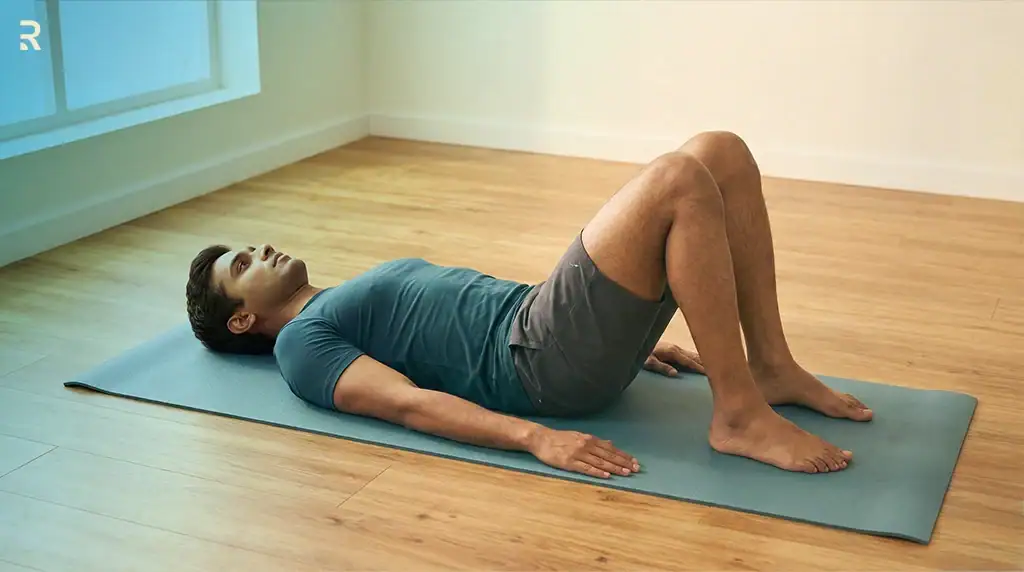
Kegel exercise for premature ejaculation is a free, drug-free way to last longer, and research backs it. Kegels strengthen the pelvic floor muscles that squeeze during ejaculation, so you can sense and hold back the reflex. In a supervised 12-week programme, 33 of 40 men gained control. Most men notice a change after 6 to 8 weeks.
If you finish sooner than you or your partner would like, you are not alone, and it is not a personal failing. Premature ejaculation (PE, sometimes searched as shighrapatan) is common and treatable. Cleveland Clinic estimates that 30% to 40% of men experience it at some point in their lives.
This guide shows you how to find the right muscles, the exact 3-step routine, a 12-week plan, how long results take, the mistakes that stop Kegels working, and when exercise alone is not enough.
Kegels are one tool among several. For the full picture, including medicines and therapy, read our complete guide to premature ejaculation treatment. This post stays focused on doing Kegels properly.
Do Kegel exercises really help premature ejaculation?
Yes, for many men. Kegels train the muscles that control ejaculation, and studies show real gains in how long men last, though results are best with regular, correct practice and they are not a cure on their own.
Your pelvic floor is a sling of muscles that runs from your pubic bone to your tailbone. One of them, at the base of the penis, contracts in rhythmic waves to push out semen when you ejaculate. When these muscles are strong and, just as importantly, under your conscious control, you get an earlier warning that you are close and more ability to hold back.
What the research shows
- The headline study: Italian urologists treated 40 men with lifelong PE who usually finished within a minute. After 12 weeks of pelvic floor rehabilitation, 33 of the 40 men (82.5%) gained control of their ejaculation reflex, lasting about 146 seconds on average, close to two and a half minutes. Thirteen men rechecked six months later still averaged about 113 seconds, against about 40 seconds before treatment.
- The newest review: a 2026 meta-analysis of five randomised trials (236 men) in the Journal of Sexual Medicine found that pelvic floor training helps, but on its own it improved timing less than dapoxetine or combined treatments did.
An honest caveat: the 82.5% study used supervised sessions with a physiotherapist, including biofeedback and electrical muscle stimulation, not home exercise alone. Home Kegels are the self-guided version of the same training. They cost nothing and are safe for most men, but your results may be smaller or slower, and they depend on doing them correctly and regularly.
So think of Kegels as a strong first step. For some men they are enough. For others they work best alongside other treatment, which is why the cause of your PE matters.
How do you do Kegel exercises for premature ejaculation, step by step?
Find the right muscles, then do a slow set (squeeze for 3 to 5 seconds, relax for the same time, 10 times) followed by a quick set (10 fast squeeze-and-release pulses). Do this two to three times a day, building the hold up to 10 seconds over a few weeks.
This routine follows the Kegel guidance for men from Cleveland Clinic, which suggests squeezing for about five seconds and relaxing for five, 10 times per session, three sessions a day, working up to 10-second holds. Empty your bladder before you start and breathe normally throughout.
Step 1: Find your Kegel muscles
- The urine test (once only): the next time you pass urine, try to slow or stop the stream for a second. The muscles doing that are your Kegel muscles. Use this only to learn the feeling. Do not make a habit of stopping your urine, as it can stop your bladder emptying fully.
- The gas and scrotum cue: tighten as if you are holding in gas, or as if you are pulling your testicles up towards your body. That inward lift is the right movement.
- The finger check: rest a finger lightly on the skin between your scrotum and back passage (the perineum) and squeeze. You should feel it tighten and lift away from your finger.
- The mirror check: standing in front of a mirror without clothes, squeeze. The base of your penis should draw in slightly and your testicles should rise a little.
Your stomach, buttocks and thighs should stay still. If your belly hardens or your bottom clenches, ease off until only the pelvic floor moves. Most men get it within a day or two.
Step 2: Long holds
- Lie on your back with your knees bent and feet flat. It is easiest to feel the muscles here.
- Squeeze and lift your pelvic floor, as if stopping urine and holding in gas at the same time.
- Hold for 3 to 5 seconds while breathing normally. Count out loud if you catch yourself holding your breath.
- Relax completely for the same number of seconds. Letting go matters as much as squeezing.
- Repeat 10 times.
Step 3: Quick flicks
- Squeeze firmly and let go straight away, about one second each.
- Repeat 10 times at a steady rhythm.
- Rest for a minute. That is one session done, in under five minutes.
Long holds build endurance. Quick flicks train the fast, strong contraction you will use to hold back during sex. You need both.
A 12-week Kegel routine
Build up slowly. Adding too much too fast tires the muscles and your form slips.
| Weeks | Position | Long holds | Quick flicks | Sessions |
|---|---|---|---|---|
| 1 to 2 | Lying down | 3 to 5 seconds, 10 times | 10 | 2 a day |
| 3 to 4 | Sitting | 5 to 7 seconds, 10 times | 10 | 3 a day |
| 5 to 12 | Standing or any position | Up to 10 seconds, 10 times | 10 to 15 | 3 a day, 5 days a week with 2 rest days |
| After 12 | Any | Up to 10 seconds, 10 times | 10 | 1 a day, or a few times a week, to keep your gains |
Sitting, standing or lying down: where to do them
Start lying down for the first week or two, because gravity is not working against you. Once that feels easy, do your sets sitting on a chair, then standing, which is hardest and closest to real life.
A practical point for Indian homes: nobody can tell you are doing Kegels. In a joint family with little privacy, you can do a session at your desk, on the metro, at a red light or in front of the TV. Tie your sessions to things you already do, such as morning tea, the commute and brushing your teeth at night, and you will rarely miss one.
Using the squeeze during sex
Once you can hold a strong 10-second squeeze standing up, start using it during masturbation, then with your partner:
- Notice the build-up. Learn the moment just before the point of no return, when you are close but can still stop.
- At that moment, stop moving and squeeze your pelvic floor firmly for a few seconds while breathing slowly.
- Wait until the urge settles, then carry on.
This pairs well with the start-stop method, which Cleveland Clinic describes as stopping stimulation for about 30 seconds when you are close, repeated three or four times. Practise alone first. Some positions also give you more control over pace, and our guide to positions that make the squeeze easier explains which ones.
How long do Kegel exercises take to work for premature ejaculation?
Most men notice a change after 6 to 8 weeks of regular practice, and PE studies measured their results at 12 weeks. Give it about three months before judging whether it is working for you.

Two things are changing, and both take time. The muscles get stronger, which takes weeks, as with any muscle. Your brain also learns to sense the build-up and switch the muscles on at the right moment. Cleveland Clinic says most people notice changes after six to eight weeks, and the Italian PE study ran for 12 weeks before measuring results.
A realistic picture looks like this:
- Weeks 1 to 2: you find the muscles easily and sessions stop feeling awkward.
- Weeks 3 to 6: many men feel more aware of the build-up and a little more control.
- Weeks 6 to 12: the window in which most men, and the studies, see a clear difference.
- After 12 weeks: keep a short routine going. In the Italian study, men rechecked at six months had kept much of their gain.
Like any muscle training, the benefit fades if you stop completely. Kegels also pair well with other daily habits that calm the body, such as yoga for premature ejaculation, slow breathing, good sleep and regular exercise.
What mistakes stop Kegel exercises from working?
The most common mistakes are holding your breath, squeezing your stomach, buttocks or thighs instead of the pelvic floor, doing too many reps too soon, and giving up at week three, before results usually show.
- Holding your breath: it pushes down on the pelvic floor. Breathe normally, or count out loud.
- Using the wrong muscles: if your bottom clenches or your belly hardens, reduce the effort until only the pelvic floor moves.
- Overdoing it: hundreds of squeezes a day, or minute-long holds, tire the muscles. Cleveland Clinic warns that too many Kegels can increase muscle tension and make symptoms worse. Correct and regular beats more.
- Not relaxing between squeezes: rest for as long as you held.
- Only doing holds: skip the quick flicks and you miss the fast contraction you need during sex.
- Practising while passing urine: use the urine test once to find the muscles, never as your daily exercise.
- Pushing through pain: Kegels should never hurt. If they do, stop and read the next section.
- Quitting too early: many men stop around week two or three, well before the 6 to 8 week mark.
What are reverse Kegels, and who needs them?
Reverse Kegels train you to relax and lengthen the pelvic floor instead of squeezing it. They suit men whose pelvic floor is already too tight, which can show up as aching, trouble relaxing, or feeling close to climax from the very start of sex.
Not every pelvic floor is weak. In some men the muscles are overactive: they stay tense when they should relax. Squeezing them harder can make things worse, which is one reason Kegels help some men with PE and not others.
Signs your pelvic floor may be too tight
- Aching in the pelvis, testicles, or the area between the scrotum and back passage.
- Pain during or after ejaculation.
- Difficulty starting to pass urine, or a weak stream.
- Kegels that make you feel sore or more on edge, not more in control.
How to do a reverse Kegel
- Lie on your back or sit comfortably, with your belly soft.
- Breathe in slowly through your nose and let your belly rise.
- As you breathe in, gently let your pelvic floor drop and open, the feeling you get just as you start to pass urine. Do not push or strain.
- Breathe out slowly and let everything stay relaxed.
- Repeat for 5 to 10 slow breaths, once or twice a day.
Reverse Kegels are supported by clinical practice and early research rather than large trials. If you think your pelvic floor is tight, pause regular Kegels and see a doctor or a pelvic floor physiotherapist, who can check and guide you.
Why might Kegel exercises alone not fix premature ejaculation?
Because PE usually has more than one cause. Kegels train the muscle, but they cannot fix performance anxiety, a very sensitive reflex, a prostate or hormone problem, or PE driven by fear of losing an erection.
This is the heart of how we work at Raaz: the same problem can have very different root causes in two different men. That is why Kegels work brilliantly for one man and hardly at all for another. It also helps to know that 1 in 4 men struggle with ED and PE. It is a health condition, not a lack of manhood.
A common myth is that PE is "all in the mind". In practice, most cases mix physical and psychological causes, which is why a doctor looks at both.
Lifelong or acquired PE?
Lifelong PE has been there since your first sexual experience. It is thought to be linked to how the brain handles chemicals such as serotonin, and it often needs more than exercise. Acquired PE starts later, after a time when control was normal. It is more often linked to something new: stress, an erection problem, a prostate issue or a hormone change. Knowing which one you have changes the plan.
Physical causes
According to Cleveland Clinic, physical factors linked to PE include:
- Brain chemistry: low serotonin or dopamine, chemicals involved in arousal and ejaculation.
- Hormones: such as changes in oxytocin. Doctors also check the thyroid, since an overactive thyroid has been linked with PE.
- An inflamed prostate.
- Erectile dysfunction: men who worry about losing their erection often rush to finish before it fades.
- A penis that is extra sensitive to stimulation.
Everyday habits matter too. Heavy drinking, smoking, gutkha, poor sleep, and conditions such as diabetes and high BP all affect sexual health, so a good doctor asks about them.
Mind and relationship causes
Performance anxiety creates a loop: you worry about finishing early, the worry speeds things up, and next time you worry more. Stress at work, pressure to perform soon after marriage, a new partner or tension in a relationship can all feed it. Learn more about how anxiety speeds up ejaculation and what helps.
Kegels can still help in all of these cases, but the cause underneath needs attention too. Not sure whether weak muscles, stress or something else is behind your PE? Take the free, private Men's Test. It takes about 2 minutes and helps a doctor find your likely root cause.
Kegels, ayurvedic remedies and medicines: what should Indian men know?
Kegels are free, private and have better evidence than the ayurvedic "timing" products sold online, some of which have been found to contain lead or mercury. Medicines for PE work, but only on a doctor's prescription, and combining approaches tends to work better than exercise alone.
| Option | Evidence for PE | Main risks | Cost |
|---|---|---|---|
| Kegel exercises | Randomised trials show benefit; smaller effect than medicine when used alone | Very low; soreness if overdone or if the pelvic floor is already tight | Free |
| Yoga (Mula Bandha, Ashwini Mudra) | Works the same muscles; not tested in PE trials on its own | Very low | Free |
| Ayurvedic "timing" capsules and oils | No good-quality proof for most products | Heavy metals in some products; unknown ingredients | Ongoing purchase |
| Roadside or online "instant timing" pills and sprays | None you can verify | Unknown drugs and strength; numbness for you or your partner | Ongoing purchase |
| Prescription medicine | Strong evidence from randomised trials | Side effects and interactions, so a doctor must decide | Ongoing, on prescription |
Mula Bandha and Ashwini Mudra: yoga's version of Kegels
If you practise yoga, you may already know this squeeze. Mula Bandha (the root lock) draws the pelvic floor up and in, much like a Kegel hold. Ashwini Mudra is a rhythmic contraction and release of the muscles around the back passage, much like quick flicks. Neither has been tested on its own in PE trials, but they work the same muscles and fit easily into a morning yoga routine.

Ayurvedic "timing" capsules and oils: what the evidence shows
Many Indian men try an ayurvedic "timing" product before anything else. Most of these have no good-quality trials behind them for PE, and one product in a shop tells you little about another.
Safety is the bigger worry. A study published in JAMA bought ayurvedic medicines online and found that about 1 in 5 (20.7%) contained lead, mercury or arsenic, in both US-made and Indian-made products. The study is from 2008, but it is a good reason to buy only from licensed makers and to tell your doctor what you take. Ayurveda is not the enemy here; unregulated products are. For an honest look at diet, herbs and other home remedies for premature ejaculation, see our separate guide.
The same caution applies to the posters near railway stations promising "instant timing" or a permanent cure for gupt rog. An unlabelled tablet or churan can contain anything, and no honest doctor promises a 100% permanent cure in a week. That promise is the clearest sign of a fake clinic.
Medicines a doctor may prescribe
Doctors can prescribe dapoxetine (a short-acting medicine made for PE), other SSRI medicines, or local anaesthetic creams and sprays. All of these are used only on a doctor's prescription, because the right choice depends on your health, your other medicines and the cause of your PE. With numbing products, Cleveland Clinic advises washing the penis before sex so your partner does not go numb too.
How do Kegels compare? The 2026 meta-analysis found that exercise alone improved timing less than dapoxetine or combined programmes, such as pelvic floor training with breathing exercises. So Kegels are rarely a waste of time, but if they are not enough on their own, a doctor can add to them rather than replace them.
What it costs, and do you need an app?
- Kegels: free, and you need no equipment.
- Apps: free Kegel reminder apps can help you stay regular, but you do not need a paid device, trainer or "Kegel machine" to start.
- Pelvic floor physiotherapy: available in larger Indian cities if you want supervised training or have a tight pelvic floor.
- A doctor's opinion: worth it if three months of regular Kegels have not helped, because the cause may lie elsewhere.
When should you see a doctor for premature ejaculation?
See a doctor if there is no improvement after about three months of regular Kegels, if Kegels cause pain, if PE comes with erection problems, or if it is affecting your relationship or confidence. PE is treatable, so there is no need to keep guessing.
Book a visit soon if you notice any of these:
- Pain in the pelvis, testicles or perineum, especially if it gets worse with Kegels.
- Pain or burning when you pass urine or ejaculate, or blood in your semen.
- PE that began suddenly after years of normal control, especially with other new symptoms such as tiredness, weight change or a racing heart.
- Difficulty getting or keeping an erection as well as finishing early.
- Three months of correct, regular Kegels with no change.
- Worry about sex that is affecting your mood, sleep or relationship.
Not sure who to see? Our guide on which doctor to consult for premature ejaculation explains the difference between a sexologist, a urologist and a GP. At Raaz, a doctor first looks for the cause, checking things like hormones, thyroid, stress, habits and conditions such as diabetes, instead of handing everyone the same pills. Raaz has carried out 50,000+ doctor consultations, privately and from home, so whatever you are dealing with, our doctors have heard it before.
The bottom line: Kegels are free, private and backed by research, so they are worth starting today. Do them correctly, give them 6 to 12 weeks, and keep going once they work. They work best when you know why PE is happening for you. Take the free Men's Test (about 2 minutes, completely private) to find your likely root cause, and a doctor-led plan can follow if you need one.
Frequently asked questions
Can Kegel exercises cure premature ejaculation permanently?
Kegels can give lasting improvement, but no one can honestly promise a permanent cure. In one small study, men rechecked six months after a 12-week pelvic floor programme had kept much of their gain. How lasting it is depends on why your PE is happening, and like any exercise the benefit fades if you stop completely, so keep a short routine going a few times a week.
Can Kegel exercises increase timing?
Yes, for many men. Timing, meaning how long you last before ejaculating, rose from under a minute to about two and a half minutes on average in a 12-week supervised pelvic floor study. The gain is usually steady rather than dramatic. A 2026 review found the effect is bigger when exercise is combined with other treatment than when Kegels are done alone.
Do Kegel exercises help erectile dysfunction too?
They can. The same pelvic floor muscles help keep blood in the penis during an erection, and small studies suggest pelvic floor training improves erections as well as ejaculation control. But erection problems often have causes such as diabetes, high BP, cholesterol or low testosterone that exercise alone will not fix. Our guide covers exercises for erectile dysfunction beyond Kegels.
Do Kegel exercises increase penis size?
No. Kegels strengthen the muscles at the base of the penis, which can make erections feel firmer and improve control, but they do not change length or girth. Be wary of any app, device or video that promises size gains from Kegels, as no good-quality study supports it. Most men who worry are well within the normal range; read what Indian men need to know about penis size.
Can Kegel exercises be harmful?
Done correctly, they are very safe. Problems usually come from overdoing them, or from doing them when your pelvic floor is already too tight, which can cause pain in the pelvis, testicles or back passage and may even make PE worse. If Kegels hurt, stop, switch to reverse Kegels and speak to a doctor. Also avoid stopping your urine stream as a habit.
Do Kegel exercises increase testosterone?
There is no good evidence that they do. Kegels build muscle strength and control, not hormones. If you also have low sex drive, tiredness or weaker erections along with PE, it is worth learning the symptoms of low testosterone in men. A simple blood test can rule out low testosterone or a thyroid problem, and a doctor can tell you which tests make sense.