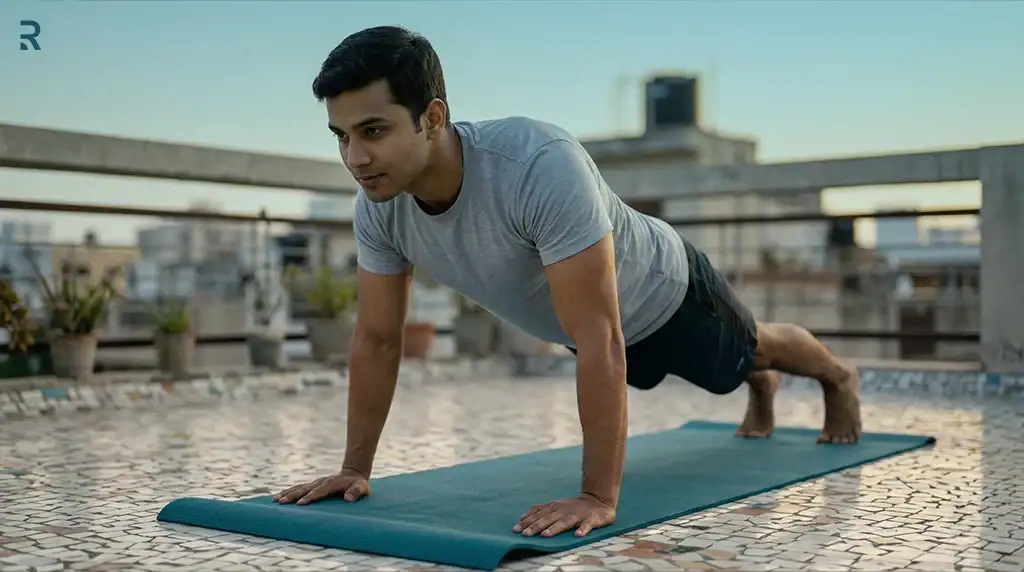
The best erectile dysfunction exercises are aerobic cardio (brisk walking, jogging, cycling, swimming), pelvic floor or kegel exercises, a few gentle yoga poses and strength training. They work by improving blood flow, weight, testosterone and stress. Expect change over weeks and clearer results in about 3 to 6 months, not days.
If erections have become unreliable, you are far from alone. "1 in 4 men struggle with ED and PE", and exercise for erectile dysfunction is one of the few steps you can start tonight, at home, for free. It is also one of the best studied. This guide explains which exercises help, exactly how to do them, how much you need, and when exercise alone is not enough.
Why does exercise help erectile dysfunction?
An erection needs healthy blood vessels, enough testosterone and a calm mind, and regular exercise improves all three. A 2017 meta-analysis in the British Journal of Sports Medicine found that aerobic exercise clearly improved erectile function scores in men with ED.
But here is the part most exercise articles skip. ED is a symptom, not a single disease. Two men with the same problem in bed can have completely different reasons behind it. At Raaz we always start by asking what is causing it, because that decides whether exercise will be enough. These are the root causes exercise can genuinely help with.
Blood flow and heart health
An erection is a blood-flow event. When you are aroused, the arteries in the penis widen and fill the spongy tissue with blood. If those arteries are stiff or narrowed, as happens with smoking, high cholesterol, high BP or diabetes, less blood gets in. Cardio keeps the lining of your blood vessels healthy and helps them widen properly.
The arteries in the penis are narrower than the ones in the heart, so they often show damage first. That is why doctors treat new ED in a man over 40 as a possible early warning sign of heart disease, and why a check-up matters.
Testosterone and hormones
Testosterone drives sex drive and supports erections. Regular exercise, and especially losing excess belly fat, helps the body keep testosterone at healthy levels. Fat tissue converts testosterone into oestrogen, so a large waistline works against you.
Weight and belly fat
Extra weight, particularly around the stomach, raises the risk of diabetes, high BP and high cholesterol, which are three of the most common causes of ED in India. Losing even a few kilos through exercise and diet can improve erections, energy and confidence.
Stress and performance anxiety
Stress hormones, especially adrenaline, tighten the blood vessels in the penis and work against arousal. Regular exercise lowers your baseline stress over time and releases endorphins, the body's natural mood lifters. For many younger men, where anxiety about performance is a big part of the problem, this effect matters as much as the physical one.
Sleep
Your body makes much of its daily testosterone while you sleep, and research shows that even a week of short nights can lower it. Exercise helps you fall asleep faster and sleep more deeply, as long as you do not train hard right before bed.
What exercise cannot fix on its own
Exercise will not correct a genuine hormone disorder such as very low testosterone or a thyroid problem, nerve damage after surgery or from long-standing diabetes, or ED caused by certain medicines. It also cannot undo daily smoking or gutkha. If one of these is behind your ED, exercise still helps, but it needs to sit alongside proper treatment. You can read more about the full range of causes and treatment of erectile dysfunction in our main guide.
Not sure which of these applies to you? Take the free Raaz Men's Test. It takes about 2 minutes, it is completely private, and it helps point to the likely root cause so you know whether exercise alone is a sensible plan or whether you should speak to a doctor.
What are the best cardio exercises for erectile dysfunction?
Brisk walking, jogging, cycling and swimming have the strongest evidence. A 2018 review in Sexual Medicine concluded that about 40 minutes of moderate to vigorous aerobic exercise, 4 times a week, for around 6 months, reduced ED in men who were inactive, overweight, or had high BP or heart disease.
"Moderate" simply means you are breathing faster and can still talk, but you could not sing. "Vigorous" means you can only say a few words at a time. You do not need a gym membership for any of this.

Brisk walking (the best starting point)
If you have not exercised in a while, start here. Walk fast enough to feel slightly out of breath for 20 minutes, 4 or 5 days a week. Add 5 minutes each week until you reach 40 minutes. A park, a society compound or even a long corridor works.
Jogging or running
Once 40 minutes of brisk walking feels easy, try alternating 2 minutes of slow jogging with 2 minutes of walking. Good shoes matter more than speed. There is no need to run fast or far to help your erections.
Cycling (and the saddle caveat)
Cycling is excellent for the heart, but long rides on a narrow, hard saddle press on the area between the scrotum and anus, where the nerves and arteries of the penis run. If you feel numbness or tingling there, that is a warning sign. Use a wider, padded saddle, set it level, stand up on the pedals every 10 minutes or so, and take breaks on long rides. A stationary bike with a comfortable seat is a good option.
Swimming
Swimming works the whole body and is gentle on the knees and back, which makes it ideal if you are heavier or have joint pain. Aim for 30 to 40 minutes of steady laps.
How do you do kegel (pelvic floor) exercises for ED?
Kegels strengthen the pelvic floor muscles that squeeze the base of the penis and help keep blood trapped inside during an erection. Tighten these muscles for 3 to 5 seconds, relax for the same time, and repeat 10 times, 2 to 3 times a day.
They have real trial evidence. In a randomised trial in the British Journal of General Practice, men who did pelvic floor exercises had clearly better erections at 3 months than men who only got lifestyle advice. By 6 months, 40% of the men in the trial had regained normal erections and about 35% more had improved.
Step by step: lying, sitting, standing
- Find the muscle. Next time you pass urine, try to slow or stop the flow midway. The muscle you use is your pelvic floor. Do this once only to learn the feeling, not as a regular exercise. Another way: tighten as if you are holding in gas, or try to make your penis lift slightly.
- Start lying down. Lie on your back with your knees bent. Squeeze the muscle, hold for 3 seconds, then fully relax for 3 seconds. Repeat 10 times.
- Move to sitting. Once lying down feels easy, do the same set sitting on a chair, and slowly build the hold to 5 seconds.
- Then standing. Standing is hardest because the muscles work against gravity. When you can manage it, you can do a set while brushing your teeth or waiting for the kettle.
Common mistakes to avoid
- Holding your breath. Breathe normally throughout.
- Squeezing your buttocks, thighs or stomach instead of the pelvic floor.
- Overdoing it. More is not better; tired muscles can cause pelvic aches.
- Stopping after 2 weeks. Gains show up at around 3 months.
For progressions, quick flicks and a week-by-week plan, see our full Kegel exercise programme for men.
Do these exercises help premature ejaculation too?
Yes. The same pelvic floor muscles help control ejaculation, so kegels are one of the few exercises that help both ED and premature ejaculation (PE). Cardio and yoga also help both by lowering anxiety, which drives many cases of PE. If you are dealing with both, our guide to yoga poses for premature ejaculation is a good companion to this one.
Which yoga poses help with erectile dysfunction?
Bridge pose, cobra pose and the seated forward bend are gentle, safe poses that work the pelvic floor, lower back and core. Most of yoga's benefit for ED comes from lowering stress and improving body awareness. Research on specific poses is limited, so treat yoga as support, not a cure.
All three need only a mat and 10 minutes. Do them on an empty stomach, move slowly, and never push into pain.
Bridge pose (setu bandhasana), also called the pelvic curl
- Lie on your back, knees bent, feet flat and hip-width apart, arms by your sides.
- Breathe out, tighten your pelvic floor and lift your hips until your body forms a straight line from shoulders to knees.
- Hold for 5 breaths, then lower slowly, one part of the spine at a time.
- Repeat 5 to 8 times. Skip it if you have a neck injury.
Pilates programmes for ED use this same move, because it trains the pelvic floor and buttocks together.
Cobra pose (bhujangasana)
- Lie on your stomach, hands flat under your shoulders, legs together.
- Breathe in and gently lift your head and chest, keeping your elbows slightly bent and your hips on the floor.
- Hold for 15 to 20 seconds while breathing normally, then lower down.
- Repeat 3 to 5 times. Avoid it if you have a recent back injury or hernia.
Seated forward bend (paschimottanasana)

- Sit with your legs straight out in front of you and your back tall.
- Breathe in and raise your arms. Breathe out and fold forward from the hips, not the waist.
- Hold your shins, ankles or feet, whichever you reach comfortably. Bending the knees is fine.
- Stay for 20 to 30 seconds with slow breaths. Skip this pose if you have a slipped disc or sciatica.
Advanced poses you may see on social media, such as the peacock pose, add injury risk for beginners without any extra evidence for ED. Stick to the basics and add slow breathing or 5 minutes of quiet meditation at the end.
Can strength training and weight loss improve erections?
Yes, gradually. Strength training builds muscle, burns belly fat and supports healthy testosterone, and losing excess weight is one of the most reliable lifestyle fixes for ED. Two or three sessions a week, alongside cardio, is enough for most men.
This is also the honest answer to the popular search for "exercise for sex power increase for men": there is no single magic move, but a stronger, leaner body with better circulation does perform better in bed.

Bodyweight squats
Stand with your feet shoulder-width apart. Push your hips back and bend your knees as if sitting on a chair, keeping your heels down and chest up. Stand back up. Do 3 sets of 10 to 15. Squats work the biggest muscles in the body, which helps with blood sugar and weight.
Push-ups and plank
Push-ups build the chest, shoulders and arms; start against a wall or with knees on the floor if a full push-up is too hard. The plank trains the core: hold a straight line from head to heels on your forearms or hands for 20 seconds, building to 60. Do 3 rounds of each.
Does gym increase testosterone?
Regular strength training and fat loss support normal testosterone levels, but the effect is modest and builds over months. There is no "gym cure". Be very careful with steroids and "testosterone boosters" sold in gyms. Anabolic steroids taken without a prescription shut down your own testosterone production, can shrink the testes and often leave men with worse ED once they stop. For safe, evidence-based options, read our guide on natural ways to raise testosterone.
How much exercise do you need, and how long until it works?
Aim for about 160 minutes of moderate to vigorous cardio a week (for example 40 minutes, 4 days a week), pelvic floor exercises every day and 2 to 3 strength sessions. In studies, improvement showed up after about 3 months, with fuller benefit by 6 months.
| Exercise | How often | How long each time | When men in studies saw change |
|---|---|---|---|
| Cardio (brisk walk, jog, cycle, swim) | 4 days a week | 40 minutes, moderate to vigorous | Programmes that helped usually ran about 6 months |
| Kegel (pelvic floor) exercises | Every day, 2 to 3 sets | 5 to 10 minutes | Clear gains at 3 months, more by 6 months |
| Yoga (bridge, cobra, forward bend) | 3 to 5 days a week | 10 to 20 minutes | Mood and stress often improve within weeks; limited ED-specific data |
| Strength training | 2 to 3 days a week | 20 to 30 minutes | Supports weight and hormone changes over months |
A simple week could look like this: brisk walk on Monday, Wednesday, Friday and Sunday; squats, push-ups and plank on Tuesday and Saturday; kegels every day; yoga for 10 minutes on most evenings.
Consistency beats intensity. Three missed weeks can wipe out a month of progress, so pick a routine you can actually keep, even on busy days.
What should Indian men know about exercise and ED?
Many Indian men carry risks that exercise alone cannot fully undo. The ICMR-INDIAB national study found that 11.4% of Indian adults have diabetes, 35.5% have high BP and 39.5% have abdominal obesity, and many do not know it. Exercise helps most when these are checked and treated too.
Diabetes, BP and belly fat: get tested, not just fit
Indian men tend to develop diabetes at a younger age and at a lower body weight than men in the West, often with a "thin outside, fat inside" pattern around the stomach. You can look slim and still have high sugar. If you are over 30 and have ED, a simple blood sugar test and a BP check are worth more than any supplement. Our guide on diabetes and erectile dysfunction explains why sugar damages erections.
Gutkha, smoking and alcohol undo the gains
According to the Global Adult Tobacco Survey 2, 28.6% of Indian adults use tobacco and 21.4% use smokeless forms such as gutkha and khaini. Tobacco in any form damages the lining of blood vessels, which is exactly what cardio is trying to repair. Read more on how chewing tobacco affects erections. Heavy drinking, including the weekend binge, also dulls erections and adds belly fat.
Food that supports your workouts on an Indian diet
You do not need imported protein powders. Dal, chana, rajma, paneer, curd, soy chunks, eggs and fish give vegetarians and non-vegetarians plenty of protein. Swap maida, sugary chai and fried namkeen for whole grains, fruit and a handful of nuts. For a full list, see our guide to Indian foods that help erections.
Ayurveda, vajikaran and TV-yoga cures: what the evidence says
Ayurveda has a whole branch, vajikaran, devoted to male vitality, and yoga is part of Indian life. Both can support a healthy routine. But be honest about the evidence:
- Ashwagandha may help with stress, but a small trial in men with anxiety-related ED found it worked no better than a placebo.
- Shilajit and unbranded "vajikaran" mixes are poorly regulated. Some such products have been found to contain heavy metals or hidden prescription drugs.
- TV and social-media yoga "cures" for ED have no trial evidence behind the promise. Yoga helps stress and fitness; it does not replace a diagnosis.
If a product or a roadside clinic promises a permanent cure in days, walk away. That claim alone tells you it is not honest medicine.
Exercising privately at home, and on high-pollution days
Many men live in joint families or small flats and feel awkward exercising where others can see. The good news is that kegels are invisible: nobody can tell you are doing them at a desk, in traffic or in front of the TV. Yoga needs only a mat and a closed door.
In cities like Delhi, Lucknow or Kolkata, winter air can be heavy with smog. Check the AQI on your phone before an outdoor walk. When it is "poor" or worse, switch to indoor options such as squats, spot jogging, stair climbing in your building, or yoga. Polluted air affects blood vessels too, as our guide on air pollution and erectile dysfunction explains.
When should you see a doctor?
See a doctor if ED has lasted more than a few weeks, is no better after 3 months of regular exercise, came on suddenly, or comes with diabetes, high BP, high cholesterol, chest pain or low sex drive. These point to a root cause exercise cannot fix alone, and most of them are very treatable.
Red flags that need a check-up soon
- ED in a man over 40 with no obvious reason, since it can come before heart symptoms by some years.
- Known diabetes, high cholesterol or high blood pressure and erectile dysfunction together.
- Very low sex drive, tiredness, loss of body hair or shrinking testes, which can mean low testosterone.
- ED that started after a new medicine.
- A curve or lump in the penis, or pain during erections.
- No morning erections at all for several weeks.
How doctors treat ED alongside exercise
A good doctor starts with the cause, not a pill. That usually means a few blood tests (sugar, cholesterol, testosterone and sometimes thyroid), a BP check and an honest talk about stress, sleep, habits and your relationship. Depending on what turns up, treatment may include managing diabetes or BP, counselling for anxiety, and medicines such as sildenafil or tadalafil, only on a doctor's prescription. These medicines are not safe for everyone, for example men taking nitrate medicines for chest pain, which is why self-medicating from a chemist is risky. Exercise continues throughout, because it makes every other treatment work better.
Is exercise safe for you? A quick check before you start
- Stop and seek medical help straight away if you get chest pain, pressure, severe breathlessness, dizziness or a racing heartbeat while exercising.
- If you already have heart disease, uncontrolled BP or diabetes, ask your doctor before starting vigorous exercise. Brisk walking is usually a safe start.
- If you have knee, back or neck problems, choose swimming, cycling or walking and skip poses that hurt.
- Start low, build slowly, and warm up for 5 minutes first.
The bottom line: the right erectile dysfunction exercises, done steadily for a few months, can make a real difference to your erections, your energy and your confidence. They work best when you know what is causing the problem in the first place. That is how Raaz approaches every patient, and it sits behind 50,000+ doctor consultations so far.
Start this week with a brisk walk and your first set of kegels. And to find your own root cause, take the free Men's Test: about 2 minutes, completely private, and a clear next step.
Frequently asked questions
Can exercise cure erectile dysfunction?
Exercise can reverse or greatly improve ED when the main causes are poor fitness, excess weight, stress or early blood-flow problems. In one trial, 40% of men regained normal erections after pelvic floor training. But ED often has several causes, such as diabetes, hormones, medicines or anxiety, so exercise works best alongside a doctor finding and treating your root cause. No exercise is a guaranteed cure.
How long does it take for exercise to improve erectile dysfunction?
Do not expect results in days. In research, men doing pelvic floor exercises saw clear improvement at 3 months and more by 6 months. Aerobic programmes that helped erections usually ran for about 6 months at 40 minutes, 4 times a week. Some men notice better energy, mood and confidence sooner, but steady practice week after week is what counts.
Does running help erectile dysfunction?
Yes. Running, like brisk walking, cycling and swimming, is aerobic exercise, which has the strongest research support for improving erections because it keeps the heart and blood vessels healthy. You do not need to run fast or far. Moderate effort, where you can talk but not sing, for about 40 minutes 4 times a week, is the level studies used.
Can kegel exercises cure erectile dysfunction?
Kegels can meaningfully improve erections for many men by strengthening the muscles that help keep blood in the penis. They work best when done correctly and daily for at least 3 months. They are not a cure for ED caused by diabetes, hormone problems or nerve damage, so see a doctor if there is no improvement after a few months of regular practice.
Does going to the gym increase testosterone?
Regular strength training and losing excess belly fat support healthy testosterone levels, which help sex drive and erections. The effect is modest and builds over months. Gym "testosterone boosters" and steroids taken without a prescription can actually lower your natural testosterone, shrink the testes and worsen ED, so avoid them and get a blood test if you suspect low testosterone.
Which exercises help both erectile dysfunction and premature ejaculation?
Pelvic floor (kegel) exercises help both, because the same muscles support erections and help control ejaculation. Aerobic exercise and yoga also help both by improving blood flow and reducing anxiety, which drives many cases of premature ejaculation. If you have both problems, a doctor can check whether they share a root cause, such as stress, low testosterone or a medical condition.